

Vol 11 No 3 2026-9

Original article
In vivo assessment of acute toxicity in OF1 mice of five synthetic heterocyclic derivatives of biological interest
Evaluación in vivo de la toxicidad aguda en ratones OF1 de cinco derivados heterocíclicos sintéticos de interés biológico
Dairon Iglesias Guevara1*, Regla M. Casanova Orta1, María de los A. Becquer Viart1, Luis M. Rodríguez Gómez1, Roberto J. Sosa Casamayor1, Alicia Casariego Año1
1Institute of Pharmacy and Food Sciences (University of Havana / Havana / Cuba);
dairon.iglesia@ifal.uh.cu. https://orcid.org/0000-0002-1825-0097
mcasanova@ifal.uh.cu. https://orcid.org/0009-0009-1159-2770
mariangel1963.06@gmail.com . https://orcid.org/0000-0001-9106-9000
luismichel0114@gmail.com. https://orcid.org/0000-0002-3909-2673
rsosacasamayor@gmail.com. https://orcid.org/0009-0001-8397-8252
alicial@ifal.uh.cu. https://orcid.org/0000-0002-7687-5984
* Correspondence: dairon.iglesia@ifal.uh.cu Tel.: +53 55752040
Available from: https://revistabionatura.org/files-web/. (Doi10.70373/RB/2026.11.03.9)
Abstract
Synthetic heterocyclic derivatives represent an important source of structures with potential biological activity, and their investigation requires characterization of the organism’s response following administration. This study assessed the acute toxicity of five synthetic heterocyclic derivatives (PE-2N-NEt, MVM-16, LM6-6, LM6-9, and PM-2N) in male OF1 mice. Eighteen animals were allocated to six groups of three, comprising five treatment groups and one control group. The compounds were administered once by the intraperitoneal route at 100 mg/kg, and the animals were monitored for 15 days. Survival, clinical manifestations, body-weight progression, the kinetics of percentage body-weight gain, and water and feed consumption were evaluated; consumption was summarized using the area under the curve. No deaths or overt clinical signs were recorded. Body weight increased progressively in all groups, and the slopes of percentage weight gain ranged from 2.56 to 2.76%/day, with coefficients of determination greater than 0.98 and no significant differences versus the control (p > 0.05). Water and feed consumption patterns were consistent with body-weight progression. Under the conditions evaluated, all five compounds showed favorable responses in the clinical, body-weight, and consumption indicators examined.
Keywords: acute toxicity; heterocyclic derivatives; body weight; preclinical assessment.
Introduction
Heterocyclic compounds occupy a prominent position in medicinal chemistry because of their structural diversity and their presence in numerous pharmacologically active agents. Vitaku and colleagues documented the extensive representation of nitrogen-containing heterocycles among approved small-molecule drugs, illustrating the interest in these ring systems as platforms for developing new bioactive entities 1. However, the pharmacological promise of a structure does not predict its toxicological behavior: relatively small changes in the molecular scaffold or its substituents may be associated with different biological responses. Experimental assessment of tolerability is therefore an important stage in the characterization of synthetic derivatives.
The assessment of toxicity following a single administration includes monitoring survival, clinical signs, and changes in general condition, including body-weight parameters. In an experimental study of imidazo-type heterocyclic derivatives, Kumar and colleagues reported different toxicological responses among compounds within the same family, including hepatic alterations at high doses for some derivatives 2. This finding highlights the need to evaluate each derivative individually rather than automatically extrapolating results across structures. International recommendations also identify clinical observation as a central component of follow-up 3,4.
Body-weight progression provides a longitudinal measure of the animals’ general response to treatment. Its interpretation is more informative when complemented by measurements of water and feed consumption, because these variables help contextualize weight changes. When analyzing repeated records, it is important to retain the animal as the experimental unit and to distinguish repeated measurements from independent biological replicates 5,6.
Combining clinical observations, body-weight changes, and consumption provides an integrated description of the response following administration. Although none of these indicators alone characterizes injury to a specific organ or identifies a mechanism of toxicity, their joint assessment can reveal relevant changes in general condition during follow-up.
The quality of experimental interpretation also depends on clearly describing administration conditions, follow-up, and statistical treatment. Reporting recommendations for animal research emphasize procedural transparency and complete presentation of results 7,8. Against this background, it is appropriate to investigate the in vivo response to synthetic heterocyclic derivatives using complementary clinical and physiological indicators 9,10.
The aim of this study was to assess overt acute tolerability of five synthetic heterocyclic derivatives of biological interest in OF1 mice after a single intraperitoneal administration by monitoring survival, observable clinical signs, body-weight progression, and water and feed consumption over 15 days.
Materials and methods
Experimental design, animals, and treatments
An experimental assessment was conducted using five synthetic heterocyclic derivatives identified by the codes PE-2N-NEt, MVM-16, LM6-6, LM6-9, and PM-2N. Eighteen male OF1 mice were assigned to six experimental groups (n = 3): one control group and five groups receiving one derivative each. The animals were housed in individual cages, enabling water and feed consumption to be recorded for each experimental unit. Each derivative was administered once by the intraperitoneal route at 100 mg/kg in a volume of 0.2 mL, using an ethanol–distilled water mixture (50:50, v/v) as vehicle. Follow-up lasted 15 days. The compound codes were used consistently throughout the study to facilitate comparison of their biological responses.
Clinical observations and body-weight monitoring
Survival and observable clinical manifestations were recorded during follow-up. Body weight was measured on days 3, 6, 9, 12, and 15 and expressed in grams as mean ± standard deviation (SD). To compare trajectories among groups with different initial weights, percentage body-weight gain was calculated using Equation (1), with day 3 as the reference. In this expression, Pₜ denotes body weight on the day evaluated and P₃ denotes body weight recorded on day 3.
ΔP(%)=(P_t-P_3)/P_3 ×100 (1)
Kinetic analysis of body-weight gain
The kinetics of percentage body-weight gain were described by fitting a linear regression model as a function of time (Equation 2). The slope (b) represents the rate of weight gain, expressed as %/day, and the coefficient of determination (R²) describes the goodness of fit of the model. Parameters were reported as mean ± SD for each group.
ΔP(%)=a+bt (2)
In Equation (2), t represents time (days), a is the intercept, and b is the slope (%/day).
Water and feed consumption
Water and feed consumption were recorded individually throughout follow-up. Cumulative consumption was summarized using the area under the curve (AUC), calculated by trapezoidal integration of successive measurements according to Equation (3).
ABC=∑_(i=1)^(n-1)▒〖(C_i+C_(i+1))/2 (t_(i+1)-t_i ) 〗 (3)
In Equation (3), Cᵢ and Cᵢ₊₁ represent two consecutive consumption records; tᵢ and tᵢ₊₁ are their respective measurement times, and n is the number of observations.
Statistical analysis
Results were expressed as mean ± standard deviation (SD). Differences among groups were evaluated by one-way analysis of variance (ANOVA) followed by Dunnett post hoc comparisons against the control, with a significance level of p < 0.05. Normality and homogeneity of variances were assessed; data were organized and plotted using Microsoft Excel, and statistical analysis was performed using IBM SPSS Statistics 25. Dunnett’s test is appropriate for multiple comparisons against a common control 11. Given the sample size of three animals per group, statistical power to detect modest effects is limited, and nonsignificance should not be interpreted as biological equivalence 5,12.
Results
Survival and clinical observations
Monitoring of the 18 OF1 mice for 15 days after administration enabled the joint assessment of survival, clinical manifestations, and body-weight progression in the five treated groups and the control. All animals completed the observation period, corresponding to 100% survival, and no overt clinical signs were recorded during follow-up. Body-weight progression and consumption indicators are presented below.
Body-weight progression
Body weight increased progressively from days 3 to 15 in all six groups (table 1). At the end of follow-up, group means ranged from 43.17 to 46.23 g among treated animals, whereas the control group reached 43.70 g. Because day-3 values differed among groups, percentage gain relative to that day allowed weight trajectories to be compared on a common basis (figure 1).

The percentage body-weight gain curves showed an upward trend for all treatments, with no evidence of a sustained reduction in weight gain relative to the control (Figure 1).
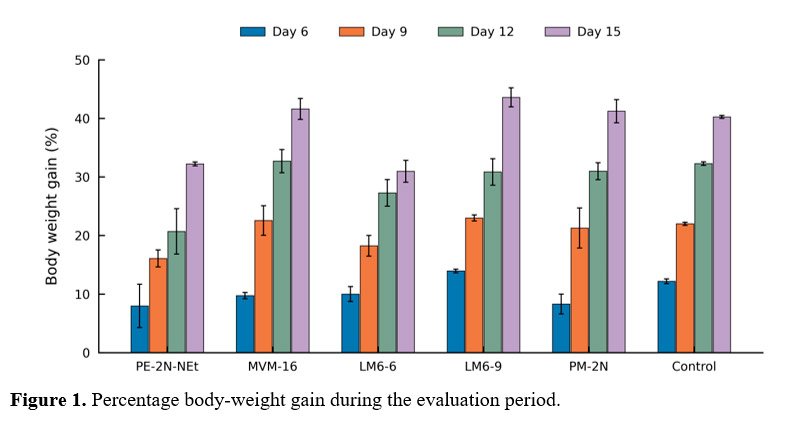
Figure 1. Percentage body-weight gain during the evaluation period.
Kinetics of percentage body-weight gain
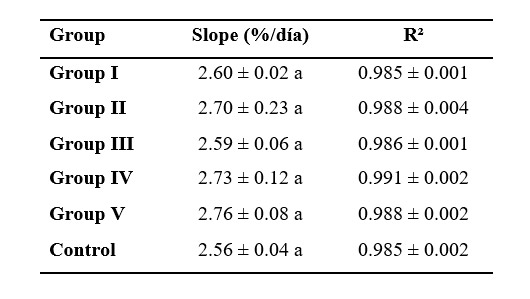
Kinetic characterization of these trajectories by linear regression yielded slopes ranging from 2.59 ± 0.06 to 2.76 ± 0.08%/day for the five derivatives, compared with 2.56 ± 0.04%/day in the control group (Table 2). Coefficients of determination ranged from 0.985 to 0.991, indicating a good descriptive fit of the linear model over the interval evaluated. Statistical comparison of the slopes revealed no significant differences between treatments and the control (p > 0.05).
Table 2. Parameters of the linear fit of percentage body-weight gain (mean ± SD; n = 3). Groups I–V: PE-2N-NEt, MVM-16, LM6-6, LM6-9, and PM-2N, respectively. Identical letters indicate no significant differences (p > 0.05).
Water and feed consumption
Analysis of water and feed consumption, summarized as the area under the curve, enabled cumulative patterns to be compared across groups (Figure 2). The observed profiles did not show a consistent reduction in consumption among treated groups relative to the control.
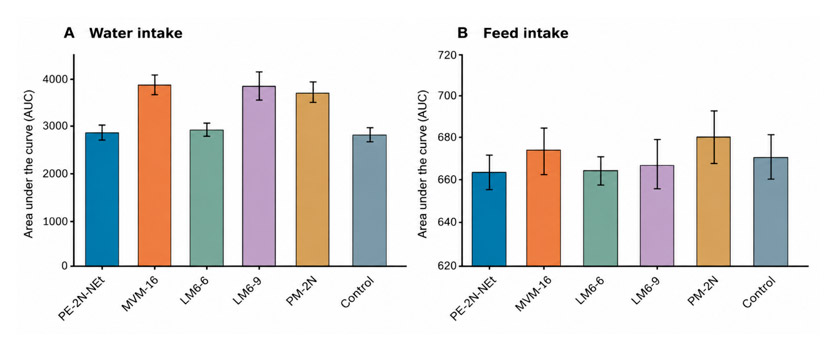
Figure 2. Water (A) and feed (B) intake represented as area under the curve (AUC).
Discussion
The absence of mortality and observable clinical manifestations after a single intraperitoneal dose of 100 mg/kg is the principal finding of this study. This observation is compatible with apparent tolerability during the period considered but does not demonstrate general safety. International acute-toxicity procedures distinguish between identifying clinical warning signs and formally classifying hazards, which requires specific designs and dose sequences 3. Moreover, these guidelines address oral administration and cannot be presented as direct validation of the present intraperitoneal experiment.
Intraperitoneal administration delivers a defined dose, but toxicological responses can vary with the exposure route. Accordingly, the absence of mortality at 100 mg/kg by this route cannot be extrapolated directly to other routes or used to estimate a median lethal dose. A single-dose design provides initial tolerability information but cannot establish a dose–response relationship or toxicity thresholds. Other OECD acute oral toxicity approaches likewise use specific dose-sequencing strategies 13,14, which differ from the present experimental design.
Body-weight monitoring complements clinical observation because it may reveal changes in general condition even when overt acute signs are absent. In this study, all six groups gained weight steadily between days 3 and 15. This common pattern suggests that treatment did not produce an evident disturbance in body-weight progression during the observation interval. Methodological guidance emphasizes interpreting body weight and food intake together and in the context of husbandry conditions because they reflect integrated organism-level responses 15,16.
Baseline weights were not identical across groups. Percentage gain therefore complements absolute weight by expressing change relative to each animal’s or group’s reference value. Nevertheless, normalization neither eliminates biological variability nor automatically corrects baseline imbalances. Festing and Altman 5 emphasize that study design and the choice of comparisons should reflect data structure and experimental objectives.
The slopes shown in Table 2 were close to one another. Their high coefficients of determination indicate that the linear approximation described the trend adequately over the assessed interval; however, a high R² does not itself demonstrate the absence of toxicity. Relevant treatment comparisons depend on slope magnitude and uncertainty, interpreted in the context of the experimental design and statistical procedure.
The lack of statistically significant differences versus the control (p > 0.05) warrants cautious interpretation. With three animals per group, the study has limited ability to detect small or heterogeneous effects. Charan and Kantharia 12 emphasize sample-size justification in animal studies, while Festing and Altman 5 recommend considering statistical power, variability, and biological relevance together. Therefore, these results do not establish equality between treatments.
Longitudinal analysis requires distinguishing individual animals from repeated observations. Measurements obtained on different days from the same animal are not independent biological replicates, and treating them as such would constitute pseudoreplication. Lazic 6 described how this problem can distort statistical interpretation in experimental research. Accordingly, interpretation of repeated measurements should distinguish longitudinal observations from independent biological replicates.
Water and feed intake provide complementary information for interpreting weight progression. Persistent reductions in intake could precede or accompany weight loss, whereas relatively stable patterns are compatible with maintenance of feeding and hydration. Intake measurements are not, however, specific markers of organ injury. Repeated-dose guidelines incorporate these variables together with hematology, clinical chemistry, necropsy, and histopathology because toxicity assessment cannot depend on a single endpoint 16,17.
The area under the curve is a useful summary of serial observations, but it compresses temporal information into a cumulative measure. Two groups with similar AUC values may have followed different trajectories, including brief periods of reduced or increased intake. AUC interpretation should therefore remain linked to the temporal pattern and the quality of the experimental record. Mathematical integration cannot substitute for missing clinical or biochemical measurements.
Reporting quality is a component of evidential strength. ARRIVE 2.0 calls for clear reporting of study design, sample size, inclusion criteria, allocation procedures, and analysis so that readers can assess reproducibility and possible bias 8. Its accompanying explanation and elaboration document provides further guidance for applying these reporting principles 18. Landis and colleagues 9 identified transparency regarding randomization, blinding, and sample-size estimation as important for preclinical research, while Hooijmans and colleagues 10 developed a tool specifically for assessing risk of bias in animal studies.
From an animal-welfare perspective, the absence of overt clinical signs should be considered alongside systematic monitoring and defined humane endpoints. OECD guidance recommends using clinical indicators to recognize deterioration and avoid unnecessary suffering 4. Appropriate care and housing are also essential for interpreting weight and intake without confusing treatment responses with environmental factors 15.
Overall, the data describe a favorable preliminary profile for the observed endpoints: complete survival, absence of overt clinical signs, sustained body-weight gain, and no statistically detected differences in growth slopes. Nevertheless, the small number of animals, exposure to a single dose, lack of dose–response assessment, and absence of organ-injury markers preclude concluding that the compounds lack systemic toxicity. Future studies should consider dose–response characterization and clinical, biochemical, and histopathological endpoints according to their safety objectives 16,17.
The results indicate a favorable response to the five derivatives for the indicators assessed at the tested dose. This information is relevant to the initial assessment of heterocyclic structures with biological potential, whose importance in medicinal chemistry is well documented 1. Interpretation is restricted to the experimental conditions and variables examined.
Conclusions
The five synthetic heterocyclic derivatives evaluated showed a favorable response after a single intraperitoneal administration at 100 mg/kg in OF1 mice. No mortality or evident clinical manifestations were recorded over 15 days. Body weight increased progressively in all groups, and kinetic analysis showed percentage-gain slopes similar to those of the control, with no significant differences (p > 0.05). Water and feed consumption patterns were consistent with these findings. Joint evaluation of these indicators characterized the animals’ response to the five compounds under the experimental conditions studied.
Author Contributions: Dairon Iglesias Guevara: Conceptualization, methodology, data interpretation, visualization, and investigation. Regla M. Casanova Orta: Investigation and methodology. María de los A. Bécquer Viart: Experimental procedures and data collection. Luis M. Rodríguez Gómez: Experimental investigation. Roberto J. Sosa Casamayor: Experimental investigation. Alicia Casariego Año: Experimental investigation, methodological review, writing—review and editing, and final manuscript approval.
Funding: This research was funded by the Ministry of Science, Technology and Environment of Cuba (CITMA) through the National Basic Research Project PN223LH010-051, entitled “Contribution of Mitochondria to the Mechanisms of Cell Death by Ferroptosis”, conducted at the Center for Biological Research and Evaluation (CEIEB), Institute of Pharmacy and Food, University of Havana, Cuba.
Institutional Review Board Statement: The experimental procedures involving OF1 mice were conducted in accordance with institutional guidelines for the care and use of laboratory animals and applicable animal welfare regulations. The experimental protocol was reviewed and approved by the Ethics Committee of the Center for Biological Research and Evaluation (CEIEB), Institute of Pharmacy and Food (IFAL), University of Havana, Cuba.
Conflicts of Interest: The authors declare no conflicts of interest.
References
Vitaku E, Smith DT, Njardarson JT. Analysis of the structural diversity, substitution patterns, and frequency of nitrogen heterocycles among U.S. FDA approved pharmaceuticals. J Med Chem. 2014;57(24):10257-10274. doi:10.1021/jm501100b.
Kumar S, Singhal A, Kumar P, Jain M, Kaur M, Gupta I, et al. Toxicological evaluation of imidazo-based heterocyclic derivatives: in-vitro and in-vivo acute toxicity studies. Toxicol Rep. 2025; 14:101872. doi:10.1016/j.toxrep.2024.101872.
OECD. Test No. 420: Acute Oral Toxicity—Fixed Dose Procedure. Paris: OECD Publishing; 2002. doi:10.1787/9789264070943-en.
OECD. Guidance Document on the Recognition, Assessment and Use of Clinical Signs as Humane Endpoints for Experimental Animals Used in Safety Evaluation. OECD Series on Testing and Assessment No. 19. Paris: OECD; 2000.
Festing MFW, Altman DG. Guidelines for the design and statistical analysis of experiments using laboratory animals. ILAR J. 2002;43(4):244–258. doi:10.1093/ilar.43.4.244.
Lazic SE. The problem of pseudoreplication in neuroscientific studies: is it affecting your analysis? BMC Neurosci. 2010; 11:5. doi:10.1186/1471-2202-11-5.
Kilkenny C, Browne WJ, Cuthill IC, Emerson M, Altman DG. Improving bioscience research reporting: the ARRIVE guidelines for reporting animal research. PLoS Biol. 2010;8(6): e1000412. doi:10.1371/journal.pbio.1000412.
Percie du Sert N, et al. The ARRIVE guidelines 2.0: updated guidelines for reporting animal research. PLoS Biol. 2020;18(7): e3000410. doi:10.1371/journal.pbio.3000410.
Landis SC, et al. A call for transparent reporting to optimize the predictive value of preclinical research. Nature. 2012; 490:187–191. doi:10.1038/nature11556.
Hooijmans CR, et al. SYRCLE’s risk of bias tool for animal studies. BMC Med Res Methodol. 2014; 14:43. doi:10.1186/1471-2288-14-43.
Dunnett CW. A multiple comparison procedure for comparing several treatments with a control. J Am Stat Assoc. 1955;50(272):1096–1121. doi:10.1080/01621459.1955.10501294.
Charan J, Kantharia ND. How to calculate sample size in animal studies? J Pharmacol Pharmacother. 2013;4(4):303–306. doi:10.4103/0976-500X.119726.
OECD. Test No. 423: Acute Oral Toxicity—Acute Toxic Class Method. Paris: OECD Publishing; 2002. doi:10.1787/9789264071001-en.
OECD. Test No. 425: Acute Oral Toxicity: Up-and-Down Procedure. Paris: OECD Publishing; 2022. doi:10.1787/9789264071049-en.
National Research Council. Guide for the Care and Use of Laboratory Animals. 8th ed. Washington (DC): National Academies Press; 2011. doi:10.17226/12910.
OECD. Test No. 407: Repeated Dose 28-day Oral Toxicity Study in Rodents. Paris: OECD Publishing; 2008. doi:10.1787/9789264070684-en.
OECD. Test No. 408: Repeated Dose 90-Day Oral Toxicity Study in Rodents. Paris: OECD Publishing; 2018. doi:10.1787/9789264070707-en.
Percie du Sert N, et al. Reporting animal research: explanation and elaboration for the ARRIVE guidelines 2.0. PLoS Biol. 2020;18(7): e3000411. doi:10.1371/journal.pbio.3000411.
| Received: [30 julio 2026] | Accepted: [12 septiembre 2026] | Published: [15 noviembre 2026] |
Citation: Iglesias, D; Casanova, R; Becquer, M; Rodríguez, L; Sosa, R; Casariego, A. In vivo assessment of acute toxicity in OF1 mice of five synthetic heterocyclic derivatives of biological interest. Bionatura. 2026. Volumen 11, No 3.
Peer review information: Bionatura thanks the anonymous reviewers for their contribution to the peer review of this work using https://reviewerlocator.webofscience.com/
All articles published by Bionatura Journal are freely and permanently accessible online immediately after publication, without subscription charges or registration barriers.
Publisher’s Note: Bionatura stays neutral concerning jurisdictional claims in published maps and institutional affiliations.
Copyright: © 2026 by the authors. Submitted for possible open access publication under the terms and conditions of the Creative Commons Attribution (CC BY) license (https://creativecommons.org/licenses/by/4.0/)
Vol11 No2 2026
INDEXADA EN















INDEXADA EN