

Vol 11 No 3 2026-4

Artículo de revisión
Glucósidos de esteviol de Stevia rebaudiana: composición química, receptores gustativos y factores que determinan el perfil sensorial
Steviol glycosides from Stevia rebaudiana: chemical composition, taste receptors and factors that determine the sensory profile
Yilianne Díaz Herrera1, Dairon Iglesias Guevara2, *, José Ariel Arencibia Sácnhez3, Joe Doyharzabal Jiménez 4.
1,2,3,4 Instituto de Farmacia y Alimentos (Universidad de La Habana / Habana / Cuba; 1yiliannediazherrera@gmail.com . https://orcid.org/0009-0009-6287-468X
2daironig1993@gmail.com . https://orcid.org/ 0000-0002-0044-6083
3 jose.arencibia1995@gmail.com . https://orcid.org/0000-0003-4408-3162
4 doyharzabal@ifal.uh.cu . https://orcid.org/0009-0004-3461-1640
* Correspondence: daironig1993@gmail.com; Tel.: +53 55752040
Available from: https://revistabionatura.org/files-web/. (Doi10.70373/RB/2026.11.03.4)
Abstract
The steviol glycosides from Stevia rebaudiana Bertoni represent a natural alternative to artificial sweeteners, although their technological application is limited by the residual bitterness of the major compounds. The objective of this review was to systematize knowledge regarding the chemical composition of the main steviol glycosides, their interaction with taste receptors, and the structural factors that influence their sensory performance. The literature was selected by prioritizing studies on molecular modeling, dynamic sensory analysis, and functional assays published in indexed journals. A critical analysis of the literature demonstrates that the number and position ofglycosidic residues on the steviol diterpenoid core determine the sweet-bitter profile of each compound: greater glycosylation at the C-13 intensifies sweetness, while lower substitution at C-19 prolongs bitterness. Sweetness is mediated by a heterodimeric receptor with multiple binding sites allosterically regulated by G protein, whereas bitterness involves specific receptors of the bitter taste receptor family. The next-generation glycosides, rebaudioside D and rebaudioside M, exhibit the most favorable sensory profiles. Enzymatic modification aimed at increasing glycosylation emerges as the most viable strategy for reducing bitterness. It is concluded that future research should integrate structural and functional approaches to elucidate the molecular mechanisms that differentiate between compounds and to evaluate their behavior in real food matrices.
Keywords
natural sweeteners; steviol glycosides; sensory profile; taste receptors; structure-flavor relationship; Stevia rebaudiana.
Introduction
High sugar intake is associated with obesity, type 2 diabetes mellitus, metabolic syndrome, and cardiovascular disease¹,². Given the rapid increase in their prevalence, scientific evidence has identified excessive sugar consumption as a contributing dietary factor³, driving the search for natural sweeteners that overcome the drawbacks of artificial additives⁴. Intensive sweeteners offer a sweetness far superior to that of sucrose with minimal caloric content⁵,⁶.
Notable among these is the steviol glycosides (SG) from Stevia rebaudiana Bertoni (Asteraceae), a species native to southeastern Paraguay that has been traditionally used by Guaraní communities as a sweetener and medicinal plant⁷. Its leaves contain more than 60 SGs derived from a diterpenoid aglycone, with glycosidic residues at different positions; stevioside and rebaudioside A (Reb A) are the major compounds⁸.
Despite their sweetening power—200 to 450 times that of sucrose—and zero caloric content, their main limitation is residual bitterness and a metallic aftertaste, attributed to the activation of the hTAS2R4 and hTAS2R14 taste receptors⁹. The new-generation rebaudiosides D and M have cleaner profiles, although the structural mechanisms explaining these sensory differences remain controversial¹⁰.
It is hypothesized that the number and position of the glycosidic residues in the steviol core determine the sweet-bitter profile of each SG, and that concentration, pH, and food matrix modulate their perception. This article reviews the chemical composition of the main SGs from S. rebaudiana, their interaction with taste receptors, and the factors that influence their sensory performance, with the aim of systematizing available knowledge and guiding formulation strategies that maximize their acceptability¹¹.
Chemical composition of steviol glycosides:
Stevia rebaudiana is the primary plant source of steviol glycosides, a group of diterpene compounds responsible for this plant’s characteristic sweetening power. These metabolites have been studied for decades, both for their potential as natural sweeteners and for their importance in the food industry12. The first studies on the chemical characterization of the sweet components of its leaves date back to 1908. The preliminary structure of one of these glycosides, called stevioside, was first published in 1955 and was followed by a series of complementary structural studies, as well as its organic synthesis from steviol in 198013.
Steviol glycosides are structurally derived from steviol, a tetracyclic diterpenoid aglycone of the ent-kaurene type (figure 1). Various glucose, rhamnose, or xylose units are attached to this basic structure via an ester bond at positions C-13 and C-19 of the terpene aglycones of the central kaurene skeleton at positions 1,2-, 1,3-, 1,4-, and 1,6 (with α or β bonds)12,14,15. To date, more than 60 steviol glycosides have been identified in S. rebaudiana,12,16 including the steviol skeleton, stevioside, rebaudiosides A, B, C, D, F, G, I, M, and Q, rubusoside, dulcoside A, and steviolbioside (Figure 1). The two most abundant SGs, stevioside and rebaudioside A, together account for between 7% and 15% of the dry weight of the leaves, a proportion that varies depending on the genotype and the plant’s growing and harvesting conditions. Additionally, S. rebaudiana contains trace amounts of rebaudiosides B, C, D, E, F, and M, as well as steviolbioside12,14.
The structural diversity of SG results in noticeable differences in their properties, such as sweetness, bitterness, and solubility.¹⁵ Among their shared characteristics are a white or slightly yellowish color, a flavor profile similar to that of sucrose, the absence of odor, high sweetening power, and virtually zero calories.¹²
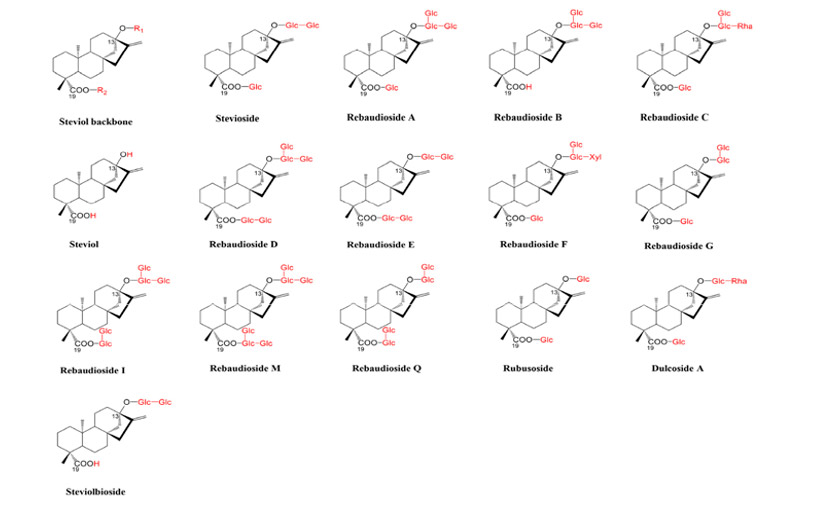 Figure 1. Steviol backbone and steviol glycoside (SG) structures. Groups highlighted in red indicate glycosylation sites. Glc: glucose; Xyl: xylose; Rha: rhamnose.12
Stevioside:
Stevioside is one of the most abundant steviol glycosides in the leaves of Stevia rebaudiana and one of the first compounds in this group to be structurally characterized. It was identified as a tetracyclic diterpene glycoside (ent-kaurene) with the molecular formula C₃₈H₆₀O₁₈, consisting of steviol, ent-13-hydroxykaur-16-en-19-oic acid as the aglycone, esterified at the C-19 carboxylic acid function (R1) with a β-D-glucopyranosyl unit and substituted at the C-13 tertiary hydroxyl (R2) with a β-sophorosyl disaccharide. Its full chemical name corresponds to the β-D-glucopyranosyl ester of 13-[(2-O-β-D-glucopyranosyl-β-D-glucopyranosyl)oxy]ent-kaur-16-en-19-oic acid13 (Table 1).
Its content in stevia leaves ranges from 5 % to 10 %, making it the primary component of the plant’s natural sweeteners. Its sweetening power is estimated to be approximately 300 times that of sucrose; however, despite this high sweetness, it has a characteristic bitterness accompanied by an unpleasant metallic aftertaste. As for its solubility, it is soluble in water, ethanol, and methanol, and insoluble in organic solvents such as benzene, ether, and chloroform12.
Rebaudioside A:
Rebaudioside A is a natural sweetener extracted from the leaves of S. rebaudiana Bertoni. Among the glycosides present in the plant, Reb A is typically found in concentrations ranging from 1.5 % to 5.0 %. Structurally, it is a tetracyclic diterpenoid glycoside with the molecular formula C₄₄H₇₀O₂₃ and 20 carbon atoms, consisting of a steviol aglycone that incorporates a glucosyl group at the C-19 position and three glucosyl groups at the C-13 position. Variations in the number of glucosyl and rhamnosyl groups at the C-13 position determine differences in the compound’s sweetness and flavor profile15,17. The sophorose group at C-13 acts as the primary determinant of sweetness, while the ester group at C-19 of the aglycone functions as a sensory modulator. The incorporation of multiple glucosyl groups at the C-13 position is essential for achieving high sweetening intensity¹⁵ (table 1). Furthermore, Reb A can be enzymatically converted into other glycosides, positioning it as a key substrate for the microbial synthesis of SG and as the compound of greatest commercial relevance within the biosynthetic pathway of these compounds¹²,¹⁸.
Its sweetness is estimated to be 450 times greater than that of sucrose. In terms of its sensory profile, it is described as relatively clean, with no off-flavors or grassy notes, although it has a slight initial bitterness and a lingering bittersweet aftertaste¹⁹. It has low water solubility, ranging from 2 % to 5 %, and is soluble in methanol¹².
Rebaudioside D:
Rebaudioside D (Reb D) is a minor glycoside found in very low concentrations (< 0.2 %) in the leaves of S. rebaudiana12. Its chemical structure, with the molecular formula C₅₀H₈₀O₂₈, was first described in 1977 and is formed by the linkage of two and three glucosyl groups at the C-19 and C-13 positions of steviol, respectively15 (Table 1).
Despite its scarce natural occurrence, this compound exhibits a sweetening power between 200 and 350 times that of sucrose, with a rapid onset of sweetness and a prolonged sweet aftertaste. Its sensory profile is characterized as clean, without bitterness and without strange or herbaceous flavors19. Its solubility in water is low12.
Rebaudioside M:
Rebaudioside M (Reb M) belongs to the so-called new generation of steviol glycosides and has attracted growing interest due to the characteristics of its sensory profile. Its chemical structure, with the molecular formula C₅₆H₉₀O₃₃, was first reported in 2014. Reb M is structurally derived from Reb D through the incorporation of an additional glucosyl group at the C-19 position, linked via β-1,315,18 glycosidic bonds (table 1). Its natural abundance in the plant is very low, with a mass fraction of less than 0.1 %. It has a sweetening power between 200 and 350 times that of sucrose, with a rapid onset of sweetness and a prolonged sweet aftertaste, an absence of bitterness and of strange or herbaceous flavors19, and slight solubility in water12.
Table 1. Molecular formula and composition of the R1/R2 groups of steviol glycosides.
| Compound | Molecular formula | R1 | R2 |
| Stevioside | C₃₈H₆₀O₁₈ | β-Glc-β-Glc(2→1) | β-Glc |
| Rebaudioside A | C₄₄H₇₀O₂₃ | β-Glc-β-Glc(2→1)
β-Glc(3→1) |
β-Glc |
| Rebaudioside D | C₅₀H₈₀O₂₈ | β-Glc-β-Glc(2→1)
β-Glc(3→1) |
β-Glc-β-Glc(2→1) |
| Rebaudioside M | C₅₆H₉₀O₃₃ | β-Glc-β-Glc(2→1)
β-Glc(3→1) |
β-Glc-β-Glc(2→1)
β-Glc(3→1) |
Sensory profiles of steviol glycosides:
Rebaudioside A has been considered the sweetest steviol glycoside compared to stevioside13, although its sensory profile includes a persistent bitter aftertaste19. Stevioside, which lacks only the glycosylation at the carboxyl group (C-19 position), exhibits lower sweetness and a more pronounced bitterness. Rebaudioside D, on the other hand, exhibits increased sweetness and weaker bitterness compared to other steviol glycosides. As for rebaudioside M, it has been described as the most potent in the group, with greater sweetening intensity and a licorice aftertaste or very slight bitterness compared to the other steviol glycosides13. Similarly, it has been observed that Reb D and Reb M exhibit a faster onset of sweetness and a shorter aftertaste, with little residual flavor, compared to the glycosides in sweet tea, conventional stevia, Reb A, and Reb C11,15.
The human taste system is a sophisticated chemical signaling network that enables the detection of five basic tastes: sweet, bitter, sour, salty, and umami. This sensory capability is mediated by G protein-coupled receptors (GPCRs), which also include metabotropic glutamate receptors (mGluRs), the calcium sensor receptor (CaSR), and the γ-aminobutyric acid receptor (GABAR)10, expressed by taste receptor cells (TRCs) that assemble into specialized structures called taste buds. Each taste bud contains approximately 100 receptor cells, organized such that each cell expresses receptors specific to a single sensory quality9,20–23.
Sweet and bitter tasting receptors:
Sweet taste receptor:
The perception of sweetness in humans is mediated exclusively by a heterodimeric receptor belonging to the TAS1R family, composed of the hTAS1R2 and hTAS1R3 proteins9,23,24. The T1R subunits are characterized by a large Venus flytrap (VFD) extracellular domain, coupled to a short cysteine-rich domain (CRD) that connects the VFD to a seven-helix transmembrane domain (TMD)10.
The heterodimeric receptor proteins hTAS1R2 and hTAS1R3 mediate the sweetness of a broad spectrum of chemical compounds, including monosaccharides, disaccharides, sweet proteins, steviol glycosides, and non-nutritive synthetic sweeteners9,15.
Bitter taste receptor:
In contrast to the detection of sweetness, which depends on a single receptor, the transduction of bitter taste in humans is mediated by a family of approximately 25 receptors encoded by the hTAS2R9, 20–22 genes. Taste receptor cells (TRCs) specialized in detecting bitterness express multiple TAS2R genes in a heterogeneous manner, although not all of them simultaneously within a single cell9,25. Among these receptors, hTAS2R4 and hTAS2R14 have been identified as the primary mediators of the bitter aftertaste associated with stevioside, as demonstrated in in vitro studies using HEK2939 cell lines9,26–29. Furthermore, cell-based assays, human sensory analysis, and molecular docking studies demonstrated that Reb A also activates the hTAS2R4 and hTAS2R14 receptors9,30–32.
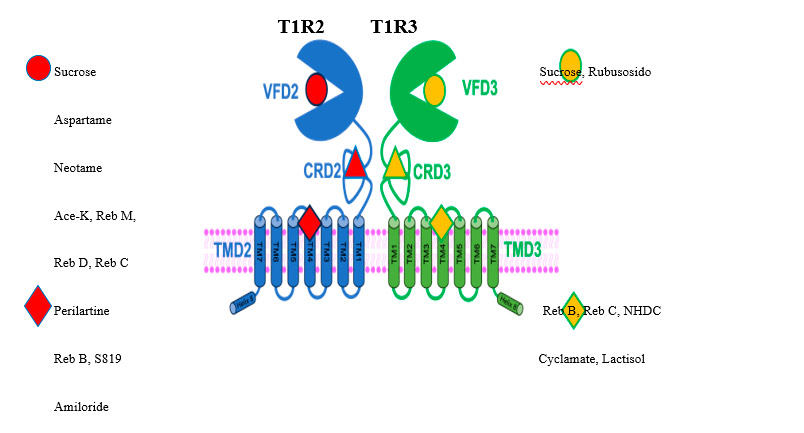 Figure 2. Schemantic of the human heterodimeric receptor for sweet taste. The receptor has multiple binding sites for sweet ligands10.
Receptor binding kinetics:
The sweet taste receptor hTAS1R2/hTAS1R3 possesses multiple binding sites for sweet ligands, allowing it to be activated by agonists with a wide range of structures and potencies.¹⁰ The extracellular region of the VFD contains two lobes that provide distinct binding pockets in the closed VFD2 and VFD3 domains, facilitating interactions with these ligands; Figure 2 illustrates these binding sites10,33. Agonist binding induces a conformational change in the VFD2 and VFD3 subdomains, shifting from an open-open conformation to a closed-open conformation. It is postulated that this closed-open conformation contributes to the active state of the hTAS1R2/hTAS1R3 heterodimer10.
Activation of the sweet receptor hTAS1R2/hTAS1R3 triggers the activation of a heterotrimeric G protein (Gp) complex composed of a Gα subunit and a Gβγ dimer. This process promotes the exchange of guanosine diphosphate (GDP) for guanosine triphosphate (GTP) in the Gα subunit, leading to its dissociation. G protein activation stimulates signaling via the sweet taste pathway, resulting in the activation of intracellular second messengers such as cyclic adenosine monophosphate (cAMP), inositol trisphosphate (IP3), and calcium ions10,34, which ultimately generate neural impulses toward the central sensory centers.
Artificial sweeteners bind to the VFD2 domain of the hTAS1R2 subunit, while the VFD3 domain preferentially binds natural sugars such as fructose and sucrose. The transmembrane domains TMD2 and TMD3, in turn, interact with allosteric modulators: TMD2 interacts with allosteric agonists such as perillartine and positive allosteric modulators such as S81910,35, while TMD3 interacts with negative modulators such as lactisol and gymnemic acid10,33,36,37, as well as with artificial sweeteners such as NHDC and cyclamate10,33 (figure 2).
Using a combination of experimental and computational approaches, Hao et al.¹⁰ characterized the binding of steviol glycosides to the sweet receptor and classified Reb M and Reb D as ligands with high sweetening potency, with Reb M exhibiting slightly greater sweetness than Reb D.
One of the most significant findings of this study concerns the role of G protein in receptor binding affinity. G protein coupling, specifically the last 20 amino acid residues at the carboxyl terminus of Gα (GNAT3), referred to as C20, can occur at both TMD2 and TMD3 and has differential effects on ligand binding affinity. For Reb M, C20 coupling to TMD2 enhanced binding to VFD2, whereas coupling to TMD3 increased the affinity for VFD3 and TMD3. These results support the hypothesis that the activation process of the sweet heterodimer is modulated by G protein coupling. In the absence of this, sweet ligand binding might not sufficiently stabilize the heterodimer’s conformation, which would lead to the opening of a greater number of binding pockets available for steviol rebaudiosides10.
The interaction of steviol glycosides with bitter taste receptors occurs via noncovalent bonds; however, a smaller number of substituents in the molecule can facilitate a tighter binding to the receptor, prolonging and intensifying the sensation of bitterness. Consequently, both the total chain length of the compound and the number of substituents are determining factors in the perception of bitterness11.
Structure–taste relationship of steviol glycosides:
The relationship between molecular structure and sweetness intensity indicates that the glucosyl residues at positions C-19 (R1) and C-13 (R2) of the steviol core are essential for the expression of this sensory property13. In a dynamic sensory modeling study of the time-intensity profiles of sweetness and bitterness for six steviol glycosides, it was found that the presence and number of glucosyl groups significantly influence the temporal perception profiles¹¹, ¹⁵. The most relevant results of this study indicate that:
– The fewer the number of glucosyl groups at the C-19 position, the shorter the duration of sweetness stimulation and the longer the perception of bitterness.
– The greater the number of glucosyl groups at C-13, the more intense and rapid the onset of sweetness.
– Compounds with fewer sugar groups exhibit a lower desorption rate at taste receptors, resulting in a persistent bitter aftertaste. This phenomenon is explained by the fact that, as the substituents at the C-19 position of the steviol glycoside become more numerous and bulky, they increase the desorption rate and, thereby, accelerate the decline in sweetness.
The bitter taste of steviol glycosides appears to be influenced by structural characteristics that simultaneously impair the perception of sweetness; in fact, differences in the total number of β-glucosyl units result in marked distinctions in the bitter profile of each compound. Although it has not been precisely clarified which regions of steviol glycoside molecules are decisive for sweetness, it is evident that the organoleptic properties are determined by both the regioselectivity and the bond specificity of the glucosyl residues13.
Factors that intensify bitterness:
In steviol glycosides, the intensification of bitterness is due to a multifactorial effect. Increasing the concentration raises the likelihood of perceiving bitter, metallic, and astringent notes, especially when the sweetener almost completely replaces sucrose. However, perception does not depend solely on the dose, but also on the food matrix, which can mask or amplify the sensory defect depending on its content of proteins, lipids, pectins, and soluble solids. Likewise, pH modulates the balance between acidity and sweetness, influencing the final expression of the sensory profile within the food. Table 2 summarizes the representative studies for each of these factors.
Table 2. Representative studies of the factors that intensify bitterness.
| Factors | Studies conducted | Findings | Bitterness mitigation strategies | References | |
| Concentration | Sensory profiles of Reb A, Reb D, and Reb M (0.1% w/v) compared to 14% w/v sucrose were evaluated using a consumer panel. | Reb A was perceived as bitter, chemical, and artificial; Reb D and Reb M did not differ significantly from sucrose, though they showed greater residual sweetness. | Not specified | 19 | |
| Acceptability of ice cream sweetened with Reb A, D, and M (0.09% w/v) compared to 14% w/v sucrose (n = 92) was determined. | Ice cream with Reb A showed the highest bitterness and lowest acceptability; only Reb M matched the sweetness intensity of sucrose. | Not specified | 38 | ||
| Six binary and ternary blends of Reb A, Reb D, and Reb M were evaluated using a trained panel (n = 6), an electronic tongue, and a consumer panel in ice cream (n = 83). | Blend 6 (16.7% Reb A, 66.7% Reb D, and 16.6% Reb M) showed the lowest bitterness and highest acceptability compared to Reb A alone. | Formulation of ternary blends with Reb D predominance (≥66%), which reduces affinity for hTAS2R receptors without diminishing sweetening potency. | 39 | ||
| Sucrose substitution with SG in apple preserves with different additives was evaluated. Without additives, only up to 10% substitution maintained a high sensory balance. | Without additives, only up to 10% substitution maintained a high sensory balance. | Addition of amidated pectin and citric acid adjusts pH to 3.20–3.29, masking bitter and metallic aftertaste. | 40 | ||
| Two stevia concentrations (0.07% and 0.14%) in apricot nectar were evaluated. | Nectar with 0.07% stevia matched the acceptability of nectar with 10% sucrose. | Not specified | 41 | ||
| pH | Sucrose substitution with SG in apple preserves under different pH conditions and with additives was evaluated. | Increased acidity amplified the negative sensory attributes of SG. | pH controlled at 3.20–3.29 with amidated pectin and citric acid: attenuates bitterness and enhances the perception of fruit sweetness. | 40 | |
| Food matrix | Muffins were prepared with 25%, 50%, 75%, and 100% sucrose substitution. | Only 25% substitution maintained acceptable sensory and quality parameters. | Not specified | 42 | |
| Cookies were made with different proportions of sucrose and ground stevia leaves. | The 50% sucrose / 50% stevia formulation achieved the highest acceptability. | Not specified | 43 | ||
| Ice cream for people with diabetes sweetened with stevia was developed. | The product achieved good sensory acceptability with 11% stevioside. | Not specified | 44 | ||
| An oat beverage with stevia powder as a sweetener was developed. | The combination of 60% stevia and 40% sucrose was the most accepted formulation. | Not specified | 45 | ||
| Brown rice cookies supplemented with Moringa oleifera and Stevia rebaudiana were prepared. | The supplemented cookies reached the «like very much» category in sensory acceptance tests. | Not specified | 46 | ||
| Frozen chocolate desserts sweetened with stevia extract (97% Reb A) were formulated. | The desserts were characterized by greater bitterness, sweet aftertaste, and bitter aftertaste. | Not specified | 47 | ||
| Stevia, thaumatin, and their blend (1:1) were evaluated in the sensory profile of skyr yogurt with mango pulp. | Yogurt with stevia showed greater bitterness and metallic taste; the stevia/thaumatin blend proved to be a viable alternative for sucrose substitution. | Stevia/thaumatin blend (1:1) masks the bitterness of SG without significant caloric increase. | 48 | ||
| The acceptability of natural sweeteners in protein beverages was evaluated. | Blends with reduced sugar showed lower bitterness and metallic taste than beverages sweetened with stevia alone. | Partial substitution of sucrose reduces the effective concentration of SG and their interaction with bitter taste receptors. | 49 | ||
| SG were encapsulated by spray drying, freeze drying, and vacuum oven drying, with maltodextrin and inulin in different proportions. | Spray drying with maltodextrin:inulin 80:20 reduced the bitter aftertaste to the lowest value and achieved the highest overall acceptability. | Microencapsulation by spray drying with maltodextrin:inulin 80:20 at 2.5% SG releases the sweetener in a controlled manner and reduces contact with bitter taste receptors. | 50 |
Conclusions
The sensory profile of the steviol glycosides from Stevia rebaudiana Bertoni depends primarily on the degree and position of glycosylation on the steviol skeleton. Greater substitution at C-13 intensifies sweetness, while lesser substitution at C-19 prolongs bitterness. Rebaudioside D and rebaudioside M exhibit the most favorable profiles for this reason. Sweetness is mediated by hTAS1R2/hTAS1R3 and bitterness by hTAS2R4 and hTAS2R14; the coactivation of both pathways limits the acceptability of these compounds, and their selectivity mechanisms are not fully understood. Enzymatic modification to increase glycosylation is the most widely supported strategy
for reducing bitterness. Partial sucrose replacement, ternary mixtures with a predominance of Reb D, and spray-drying microencapsulation are equally effective at the formulation level.
References
- Pereira MA, Odegaard AO. Artificially sweetened beverages — do they influence cardiometabolic risk? Curr Atheroscler Rep. 2013;15(12):375. doi:10.1007/s11883-013-0375-z.
- Manzur-Jattin F, Morales Núñez MD, Ordosgoitia-Morales J, Quiroz-Mendoza R, Ramos-Villegas Y, Corrales-Santander H. Impacto del uso de edulcorantes no calóricos en la salud cardiometabólica. Rev Colomb Cardiol. 2020;27(2):103–108.
- Swithers SE. Artificial sweeteners are not the answer to childhood obesity. Appetite. 2015;93:85–90. doi:10.1016/j.appet.2015.03.027.
- Saraiva A, Carrascosa C, Raheem D, Ramos F, Raposo A. Natural sweeteners: the relevance of food naturalness for consumers, food security aspects, sustainability and health impacts. 2020;9(9):1320. doi:10.3390/foods9091320.
- Carocho M, Morales P, Ferreira ICFR. Sweeteners as food additives in the XXI century: a review of what is known, and what is to come. Food Chem Toxicol. 2017;107:302–317. doi:10.1016/j.fct.2017.06.046.
- Shah R, de Jager LS. Recent analytical methods for the analysis of sweeteners in food: a regulatory perspective. Food Drug Adm Pap. 2017;5:13–32.
- Landázuri P, Tigrero JO. Stevia rebaudiana Bertoni, una planta medicinal. Sangolquí: ESPE; 2009.
- Lemus-Mondaca R, Vega-Gálvez A, Zura-Bravo L, Ah-Hen K. Stevia rebaudiana Bertoni, source of a high-potency natural sweetener: a comprehensive review on the biochemical, nutritional and functional aspects. Food Chem. 2012;132(3):1121–1132. doi:10.1016/j.foodchem.2011.11.140.
- Hellfritsch C, Brockhoff A, Stähler F, Meyerhof W, Hofmann T. Human psychometric and taste receptor responses to steviol glycosides. J Agric Food Chem. 2012;60(27):6782–6793. doi:10.1021/jf301297n.
- Hao S, Guthrie B, Kim SK, et al. Steviol rebaudiosides bind to four different sites of the human sweet taste receptor (T1R2/T1R3) complex explaining confusing experiments. Commun Chem. 2024;7:236. doi:10.1038/s42004-024-01324-x.
- Tian X, Zhong F, Xia Y. Dynamic characteristics of sweetness and bitterness and their correlation with chemical structures for six steviol glycosides. Food Res Int. 2022;151:110848. doi:10.1016/j.foodres.2021.110848.
- Jiang L, Zhao X, Li W, Tang G, Yuan Y, Cheng J, et al. A comprehensive review on steviol glycosides: sources, properties, bioactivities, sensory-functional enhancement and bioproduction strategies. 2026;15(2):324. doi:10.3390/plants15020324.
- Gerwig GJ, Te Poele EM, Dijkhuizen L, Kamerling JP. Stevia glycosides: chemical and enzymatic modifications of their carbohydrate moieties to improve the sweet-tasting quality. Adv Carbohydr Chem Biochem. 2016;73:1–72. doi:10.1016/bs.accb.2016.05.001.
- Ceunen S, Geuns JMC. Steviol glycosides: chemical diversity, metabolism, and function. J Nat Prod. 2013;76(6):1201–1228. doi:10.1021/np400203b.
- Wang A, Hu H, Yuan Y, Mei S, Zhu G, Yue Q, et al. Structure, properties, and biomedical activity of natural sweeteners steviosides: an update. Food Sci Nutr. 2025;13(2):e70002. doi:10.1002/fsn3.70002.
- Zhou X, Gong M, Lv X, Liu Y, Li J, Du G, et al. Metabolic engineering for the synthesis of steviol glycosides: current status and future prospects. Appl Microbiol Biotechnol. 2021;105:5367–5381. doi:10.1007/s00253-021-11419-3.
- Jung J, Kim S, Park S, Hong JH. Sweetness profiles of glycosylated rebaudioside A and its binary mixtures with allulose and maltitol. Food Sci Biotechnol. 2021;30(3):423–432. doi:10.1007/s10068-020-00873-w.
- Prakash I, Markosyan A, Bunders C. Development of next generation stevia sweetener: rebaudioside M. Foods. 2014;3(1):162–175. doi:10.3390/foods3010162.
- Tao R, Cho S. Consumer-based sensory characterization of steviol glycosides (rebaudioside A, D, and M). 2020;9(8):1026. doi:10.3390/foods9081026.
- Adler E, Hoon MA, Mueller KL, Chandrashekar J, Ryba NJ, Zuker CS. A novel family of mammalian taste receptors. 2000;100:693–702.
- Chandrashekar J, Mueller KL, Hoon MA, Adler E, Feng L, Guo W, et al. T2Rs function as bitter taste receptors. Cell. 2000;100:703–711.
- Matsunami H, Montmayeur JP, Buck LB. A family of candidate taste receptors in human and mouse. 2000;404:601–604.
- Li X, Staszewski L, Xu H, Durick K, Zoller M, Adler E. Human receptors for sweet and umami taste. Proc Natl Acad Sci U S A. 2002;99(7):4692–4696. doi:10.1073/pnas.072090199.
- Nelson G, Hoon MA, Chandrashekar J, Zhang Y, Ryba NJ, Zuker CS. Mammalian sweet taste receptors. Cell. 2001;106:381–390.
- Behrens M, Foerster S, Staehler F, Raguse JD, Meyerhof W. Gustatory expression pattern of the human TAS2R bitter receptor gene family reveals a heterogeneous population of bitter responsive taste receptor cells. J Neurosci. 2007;27:12630–12640.
- Maehashi K, Matano M, Wang H, Vo LA, Yamamoto Y, Huang L. Bitter peptides activate hTAS2Rs, the human bitter receptors. Biochem Biophys Res Commun. 2008;365:851–855. doi:10.1016/j.bbrc.2007.11.070.
- Sainz E, Cavenagh MM, Gutierrez J, Battey JF, Northup JK, Sullivan SL. Functional characterization of human bitter taste receptors. Biochem J. 2007;403:537–543. doi:10.1042/bj20061744.
- Shankar P, Ahuja S, Sriram K. Non-nutritive sweeteners: review and update. 2013;29:1293–1299. doi:10.1016/j.nut.2013.03.024.
- Bhardwaj V, Singh R, Singh P, Purohit R, Kumar S. Elimination of bitter off-taste of stevioside through structure modification and computational interventions. J Theor Biol. 2020;486:110094. doi:10.1016/j.jtbi.2019.110094.
- Acevedo W, González-Nilo F, Agosin E. Docking and molecular dynamics of steviol glycoside–human bitter receptor interactions. J Agric Food Chem. 2016;64(40):7585–7596. doi:10.1021/acs.jafc.6b02840.
- Singla R, Jaitak V. Synthesis of rebaudioside A from stevioside and their interaction model with hTAS2R4 bitter taste receptor. 2016;125:106–111. doi:10.1016/j.phytochem.2016.03.004.
- Belloir C, Jeannin M, Karolkowski A, Scott C, Briand L. A receptor-based assay to study the sweet and bitter tastes of sweeteners and binary sweet blends: the SWEET project. Chem Senses. 2024;49:bjae041. doi:10.1093/chemse/bjae041.
- Fujiwara S, Imada T, Nakahara K, et al. Sweeteners interacting with the transmembrane domain of the human sweet-taste receptor induce sweet-taste synergisms in binary mixtures. Food Chem. 2012;130:561–568.
- Pierce KL, Premont RT, Lefkowitz RJ. Seven-transmembrane receptors. Nat Rev Mol Cell Biol. 2002;3:639–650.
- Kim SK, Chen Y, Abrol R, Goddard WA, Guthrie B. Activation mechanism of the G protein-coupled sweet receptor heterodimer with sweeteners and allosteric agonists. Proc Natl Acad Sci U S A. 2017;114:2568–2573.
- Xu H, Staszewski L, Tang H, Adler E, Zoller M, Li X. Different functional roles of T1R subunits in the heteromeric taste receptors. Proc Natl Acad Sci U S A. 2004;101:14258–14263.
- Nakagita T, Ishida A, Matsuya T, Kobayashi T, Narukawa M, Hirokawa T, et al. Structural insights into the differences among lactisole derivatives in inhibitory mechanisms against the human sweet taste receptor. PLoS One. 2019;14(3):e0213552. doi:10.1371/journal.pone.0213552.
- Muenprasitivej N, Tao R, Nardone SJ, Cho S. The effect of steviol glycosides on sensory properties and acceptability of ice cream. 2022;11(12):1745. doi:10.3390/foods11121745.
- Moazzem MS, Williams R, Hayden M, D’Souza N, Cho S. Taste profiles of steviol glycoside blends and their application in ice cream. Int J Gastron Food Sci. 2025;40:101143. doi:10.1016/j.ijgfs.2025.101143.
- Pielak M, Czarniecka-Skubina E, Głuchowski A. Effect of sugar substitution with steviol glycosides on sensory quality and physicochemical composition of low-sugar apple preserves. 2020;9(3):293. doi:10.3390/foods9030293.
- Reale A, Di Renzo T, Russo A, Niro S, Ottombrino A, Pellicano MP. Production of low-calorie apricot nectar sweetened with stevia: impact on qualitative, sensory, and nutritional profiles. Food Sci Nutr. 2020;8(4):1837–1847. doi:10.1002/fsn3.1464.
- Karp S, Wyrwisz J, Kurek M, Wierzbicka A. Physical properties of muffins sweetened with steviol glycosides as the sucrose replacement. Food Sci Biotechnol. 2016;25(6):1591–1596. doi:10.1007/s10068-016-0245-x.
- Guerrero GA, Vázquez MB, Maraulo GE, Beaufort CE, Wallinger ML. Evaluación y caracterización sensorial, emocional y de consumo de galletas endulzadas con hojas de Stevia rebaudiana Bertoni de cultivo agroecológico. Cienc Tecnol Aliment. 2025;35(3):25–32.
- Rodríguez D, Camejo J, Rodríguez T, M’Boumba A, Seivane A, de Hombre-Morgado R. Utilización del edulcorante estevia en helado para diabéticos. Cienc Tecnol Aliment. 2016;26(3):34–38.
- Ruiz Güiza JP, Heredia Avella M. Evaluación del efecto sobre la vida útil del uso de Stevia rebaudiana Bertoni como edulcorante en una bebida a base de avena [tesis de grado]. Bogotá: Universidad de La Salle; 2017.
- Almora-Hernández E, Monteagudo-Borges R, Lago-Abascal V, León-Sánchez G, Rodríguez-Jiménez E. Evaluación fisicoquímica y sensorial de galletas de arroz integral suplementadas con Moringa oleifera y Stevia rebaudiana. Tecnol Quim. 2023;43(1):81–100.
- De Medeiros AC, Filho ERT, Bolini HMA. Impact of natural and artificial sweeteners compounds in the sensory profile and preference drivers applied to traditional, lactose-free, and vegan frozen desserts of chocolate flavor. J Food Sci. 2019;84(10):2973–2982. doi:10.1111/1750-3841.14806.
- Pereira CTM, Pereira DM, Bolini HMA. Influence of a prebiotic and natural sweeteners on the sensory profile of skyr yogurt with mango pulp. J Food Sci. 2021;86(6):2626–2639. doi:10.1111/1750-3841.15760.
- Parker MN, Lopetcharat K, Drake MA. Consumer acceptance of natural sweeteners in protein beverages. J Dairy Sci. 2018;101(10):8875–8889. doi:10.3168/jds.2018-14707.
- Chranioti C, Chanioti S, Tzia C. Comparison of spray, freeze and oven drying as a means of reducing bitter aftertaste of steviol glycosides (derived from Stevia rebaudiana Bertoni plant): evaluation of the final products. Food Chem. 2016;190:1151-1158. doi:10.1016/j.foodchem.2015.06.083.
| Received: [10 agosto 2026] | Accepted: 20 octubre 2026 | Published: 15 noviembre 2026 |
Citation: Díaz, Y; Iglesias, D; Arencibia, J; Doyharzabal, J. Steviol glycosides from Stevia rebaudiana: chemical composition, taste receptors and factors that determine the sensory profile. Bionatura. 2026; Volume 11. No 3.
Peer review information: Bionatura thanks the anonymous reviewers for their contribution to the peer review of this work using https://reviewerlocator.webofscience.com/
All articles published by Bionatura Journal are freely and permanently accessible online immediately after publication, without subscription charges or registration barriers.
Publisher’s Note: Bionatura stays neutral concerning jurisdictional claims in published maps and institutional affiliations.
Copyright: © 2026 by the authors. Submitted for possible open access publication under the terms and conditions of the Creative Commons Attribution (CC BY) license (https://creativecommons.org/licenses/by/4.0/)
Vol11 No2 2026

INDEXADA EN















INDEXADA EN