

Vol 11 No 2 2026-1

Physical and sensory characteristics of Trinitario cocoa (Theobroma cacao L.) using microbial extracts from consortia, fruits and yeasts
Características físicas y sensoriales en cacao Trinitario (Theobroma cacao L.) utilizando consorcio microbiano, extractos de frutas y levaduras
Valeria Bastidas-Ruiz1,2 (https://orcid.org/0000-0003-3249-5215), Luis Paredes-Toala1,2 (https://orcid.org/0009-0001-4911-7061), Kerly Alvarado-Vásquez3* (https://orcid.org/0000-0003-0494-7085), Mario Macias-Yela2,4 (https://orcid.org/0009-0004-9535-8343), Germán Jácome-López2,4 (https://orcid.org/0000-0001-8567-7712), Deisy Chávez-Bajaña2,5 (https://orcid.org/0009-0002-9476-1961), Evelyn Yanez-Bajaña2,6 (https://orcid.org/0009-0000-8686-9337), Magaly Puente-Mendoza3 (https://orcid.org/0000-0002-7733-950X), Jose Puente-Mendoza2,6 (https://orcid.org/0009-0007-5460-7536).
1Cantonal Agricultural Center of Quevedo, Quevedo-Ecuador; cacq007@gmail.com.
2State Technical University of Quevedo, Quevedo-Ecuador Graduate School, Agroecology and Sustainable Development Career; valeriaerui.bastidas@uteq.edu.ec; luisatoa.paredes@uteq.edu.ec; https://orcid.org/0000-0003-3249-5215; https://orcid.org/0009-0001-4911-7061.
3* Universidad Nacional del Cuyo, ICAI-CONICET, M5502JMA, Mendoza – Argentina, PhD Candidate in Product and Process Engineering of the Food Industry, Faculty of Sciences Applied to Industry; kalvarado6940@utm.edu.ec; magaly.puente@uteq.edu.ec; https://orcid.org/0000-0003-0494-7085; https://orcid.org/0000-0002-7733-950X.
4Agrarian University of Ecuador, Guayaquil-Ecuador, Postgraduate System (SIPUAE), Master’s Degree in Sustainable Agroecology and Agriculture; macias@fianecuador.org.ec; gjacome@uteq.edu.ec; https://orcid.org/0009-0004-9535-8343; https://orcid.org/0000-0001-8567-7712.
5State Technical University of Quevedo, Quevedo-Ecuador, Professor, Admission and Leveling Unit; dchavezb2@uteq.edu.ec; https://orcid.org/0009-0002-9476-1961.
6State Technical University of Quevedo, Quevedo-Ecuador, Faculty of Livestock and Biological Sciences, Agricultural Career; evelyn.yanez2018@uteq.edu.ec; jpuentem@uteq.edu.ec; https://orcid.org/0009-0000-8686-9337; https://orcid.org/0009-0007-5460-7536
* Correspondence: kalvarado6940@utm.edu.ec; +593 988485490
DOI: https://doi.org/10.70373/RB/2026.11.02.1
Abstract
The physical characteristics of the cocoa bean, such as the percentage of testa and cotyledon, are directly influenced by the post-harvest and fermentation conditions, which is essential for the evolution of its organoleptic profile, since it directly influences the sensory and commercial quality. The objective was to analyze the effect of a microbial consortium, enzymatic extract of grape and apple, together with yeasts, on the physical and sensory characteristics of the grain during fermentation. For the statistical analysis, a Trifactorial Completely Randomized Design (ABI) plus a control with two replications was used. During the process, parameters such as temperature (26 °C – 48 °C), pH (3,78 to 5,55) and total soluble solids (22 °Brix to 5 °Brix), indicators of active and efficient fermentation, were monitored. The sensory analysis according to the INEN 176/2018 standard showed a 90% good fermentation and a reduction of violet grains to 0 % – 1 %. The final humidity remained between 7 %and 8 %. In addition, heavy metal residues were evaluated according to European regulation 1323/2021, with favorable results: the sample of cocoa paste in the control presented 0,45 mg/kg and the T12 treatment, 0,35 mg/kg, showing a reduction of 0,10 mg/kg. From an agroecological approach, the use of beneficial microorganisms and natural extracts not only enhances the sensory quality of cocoa, but also promotes sustainability, reduces synthetic inputs and strengthens the microbial biodiversity of the cocoa system.
Keywords
Agroecology 1, microorganisms 2, fermentation 3, postharvest 4, bioconversion 5.
Introduction
Cocoa (Theobroma cacao L.) is one of the most emblematic and valued crops worldwide, both for its economic impact and for its cultural and historical importance in various civilizations 1. It is grown mainly in tropical regions of Africa, Asia and Latin America, where it is a key source of income for millions of smallholder farmers 2. The growing global demand for quality chocolate has driven interest in techniques that optimize the cultivation, post-harvest and transformation of the cocoa bean, particularly in varieties with high added value.
In this context, Ecuador is positioned as one of the main exporting countries of fine aroma cocoa, appreciated for its flavor and unique sensory characteristics. The province of Los Ríos stands out as one of the areas with the highest national production, thanks to its favorable agro-climatic conditions and the adoption of high-yielding varieties such as Trinitario cocoa 3. This variety is the result of the hybridization between the Criollo and Forastero types, which gives it an ideal balance between productivity, resistance and sensory quality.
Within the province, the Quevedo canton represents an important nucleus of Trinitario cocoa production. Its strategic location, fertile soils and humid climate favor the development of this crop. However, despite the production potential, the artisanal fermentation systems used in the area often fail to fully develop the organoleptic profile of the grain, affecting the quality of the final product and its competitiveness in specialized markets.
Fermentation is a critical stage in cocoa processing, as it directly affects the physical-chemical and sensory properties of almonds. During this process, microbial activity transforms the compounds in the cocoa pulp, generating aroma and flavor precursors that determine the quality of the chocolate 4. Poor fermentation can result in beans with flat, bitter, or astringent flavors, while controlled fermentation can significantly improve the sensory appreciation of the product.
In this sense, the addition of specific microorganisms during fermentation, such as yeasts of the genus Saccharomyces, lactic acid bacteria (Lactobacillus), acetic bacteria (Acetobacter) and sporulated bacteria (Bacillus), has proven to be an effective strategy to obtain almonds of higher sensory quality 5. These strains contribute to the uniform development of flavor and aroma, and allow a better regulation of the fermentation process 6. Likewise, the use of commercial yeasts, both dry and fresh, favors a more active transformation of the sugars present in the cocoa pulp into ethanol and carbon dioxide, which generates heat, accelerates the decomposition of the pulp and improves the action of acetic bacteria in the aerobic phase.7
In addition, the incorporation of fruit extracts high in polyphenol oxidase such as apple or grape can complement the process by enriching the fermentation medium with enzymes that promote the breakdown of phenolic compounds. This not only intensifies the sensory profile of the bean, but also reduces the time required to complete fermentation, which represents a technical and economic advantage for producers. 8, 9
In this context, it is essential to evaluate innovative strategies to optimize the cocoa fermentation process and improve the final quality of almonds destined for the chocolate industry. Therefore, the present study aimed to investigate the effect of the use of a microbial consortium, grape and apple extracts, and yeasts on the fermentation process and on the physical and sensory properties of Trinitario cocoa almonds, in order to optimize their quality and organoleptic profile.
Materials and methods
Location
This research was carried out in the Province of Los Ríos, Finca Don Amando Ganchozo Morales and Doña Hernestina Alvear Tigrero «La Carmelita», which has an agroecological transition management located in Rcto. Montoya of the rural parish of San Carlos in the canton of Quevedo, whose coordinates are 1°04’24.5″ S and its 79°25’56.6″ W, is located at 79 meters above sea level with an average temperature of 26 °C, and 74 m above sea level.
Regarding the measurement of the physical variables, they were carried out with instruments belonging to the Technical University of Manabí. Faculty of Zootechnical Sciences extension Chone, located in the Province of Manabí of the city of Chone, its geographical coordinates 0°41’17.6″ S 80°07’27.2″ W with Lat: – 0,0688273 and Long: – 80,124218 an altitude of 17 m a.s.l., with a temperature of 25,8 °C.
For the variable of heavy metals, the analysis was carried out at the AGRORUM Laboratory located in the city of Guayaquil, CDLA. Kennedy, Av. San Jorge # 205 and 2nd West Street. Its geographical coordinates are 2°10’37.9″ S and 79°53’52.3″ W, 6 meters above sea level with a temperature of 29 °C.
Research Design
In this research, a Trifactorial Completely Randomized Design (DCA) was used plus a control and 2 replications with a total of 24 objects of study, as the first factor is the bacterial consortium where two levels were evaluated: 1,5 % and 3,0 %, that is, 30 ml and 60 ml of the solution per 2 000 g of fresh cocoa almonds as a second factor, enzymatic fruit extract was added, in this case we used grapes and apples for their Polyphenol oxidase content, the following percentage of 6,0 % grapes and 6,0 % apples was evaluated, that is, 120 ml per 2 000 g of fresh cocoa almonds, and as a third factor, 4,0 % dry yeast was added, 6,0 %, and 8,0 % i.e. 80 ml, 120 ml and 160 ml per 2 000 g of fresh cocoa almonds.
Factors and levels of study
For the processing of the experimental data, an analysis of variance, ANDEAVA, was used in order to compare the means of the treatments, the statistical differentiation between treatments was determined by Tukey’s multiple range test with a significance level of 5 % (p ≤ 0.05) the analysis was carried out using the freely licensed statistical software InfoStat.
The experimental factors considered and the levels established for each are detailed below, as shown in Table 1.
Table 1. Factors and levels under study.
| Factor Bacterial consortium | Factor Enzymatic fruit extract | Factor Yeast | |||||
| Bacteria
|
1,5 % | Grape
Apple |
6,0 % | Dry | 4,0 % | ||
| 6,0 % | |||||||
| 3,0 % | 6,0 % | 8,0 % | |||||
The selected cocoa pods were harvested directly from the tree by hand, ensuring that they were healthy and free of mechanical damage or visible diseases to ensure the homogeneity of the experimental material. Only cobs that had maturity degrees 5 were selected, according to the technical criteria established for the optimal harvest. This grade is characterized by a uniform change in external coloration, easy opening of the fruit and natural separation of the almonds from the placenta, indicating an ideal physiological state for fermentation processes.
Fermentation represents a fundamental stage in cocoa processing, as it allows fresh almonds to be transformed into beans with the potential for the development of desirable organoleptic properties, such as aroma, flavor and color characteristic of chocolate. During this phase, key biochemical reactions are initiated that directly affect the final quality of the product. 10
For the execution of this study, wooden microfermenter boxes were used, built with dimensions of 1,25 meters long, 75 cm wide and 10 cm high, with a total capacity of 48 kg of fermentative mass. These boxes offer a controlled environment that simulates on a smaller scale the artisanal fermentation conditions used by producers, but more accurately for experimental purposes. 11
In each treatment, 2 kg of fresh cocoa beans with pulp were placed, which were evenly distributed inside the corresponding box. It was ensured that the ears used were at the same degree of maturity (grade 5) to guarantee the homogeneity of the enzymatic and microbial activity that occurs during the process. 12
Fermentation took place over a period of 4 days, during which time the beans were exposed to natural biological processes and assisted according to the treatments defined in the experimental design. In this environment, yeasts, bacteria and other microorganisms began the degradation of the sugars present in the cocoa pulp, generating metabolic compounds that penetrate the interior of the bean, modifying its internal composition. 13
During this process, daily manual turning was carried out in order to guarantee a uniform oxygenation of the fermentation mass, promote the development of aerobic microorganisms, avoid excessive heat accumulation and allow a more homogeneous fermentation. The duration and conditions of the process were determined based on previous studies that establish that in controlled fermentations. A period of 96 hours is sufficient to initiate the desirable changes in the almonds without the risk of over-fermentation. 13
Addition of application dose of microorganisms
In the initial stage of the fermentation process, a microbial consortium marketed under the name EM-1 (Effective Microorganisms) was applied, containing selected strains of beneficial microorganisms with specific functions in fermentation and biotransformation processes. This product was applied on fresh cocoa almonds, the doses used were 0 % (control), 1,5 % (30 ml) and 3 % (60 ml) diluted in sterile distilled water. The EM-1 consortium is composed of viable microorganisms with probiotic and enzymatic capacity, including Lactobacillus acidophilus, Azospirillum brasilense, Azotobacter chroococcum, Saccharomyces cerevisiae, Rhizobium japonicum; its content contains Bacteria: 〖1.3×10〗^7 CFU/ml and Yeasts: 〖4,0×10〗^6 UPC/ml for yeasts.
For the elaboration of the enzymatic extract used during fermentation, solutions based on grapes (Vitis vinifera) and apple (Malus domestica) were prepared separately, fruits selected for their high content of natural enzymatic extract. In both cases, 4 pounds of fresh fruit were weighed, which were previously washed and disinfected to ensure the hygiene of the process. Subsequently, each type of fruit was blended independently with distilled water until a total volume of 4 liters per extract was reached, thus obtaining homogeneous solutions of grapes and apples ready for application.
These solutions were incorporated into the experimental treatments at 3 levels, 0 %, control without application 3 % equivalent to 60 ml and 6 % equivalent to 120 ml for every 2 kg of cocoa almonds. This formulation allowed to evaluate the effect of fruit extracts as natural enzymatic agents during fermentation, especially in the degradation of the pulp and the generation of aroma and flavor precursors in the cocoa bean. 11
Addition yeast application dose
During the initial stage of fermentation, commercial yeasts were incorporated as part of the experimental treatments in order to evaluate their effect on the fermentation process of fresh cocoa, the doses used were 0 %, control 4 % equivalent to 80 ml and 8 % equivalent to 160 ml. For its preparation, yeasts were used in dry and wet presentations, which were previously diluted in distilled water to facilitate their activation and homogenize their application on the almonds. In both cases, a total volume of 2 liters of distilled water per type of yeast was used, within which the corresponding amounts were dissolved, according to the treatment assigned.
This solution was applied directly to 2 kg of fresh almonds per treatment, ensuring an even distribution of the preparation. The controlled addition of yeasts sought to reinforce the natural microbial activity of cocoa during fermentation. Promoting the production of essential metabolites for the development of aroma and flavor, as well as greater uniformity of the transformation of the mucilage attached to the grain.
During the fermentation process, the pH variable was evaluated, for which 5 grams of cocoa almond sample were taken, crushed and 10 ml of distilled water was added. This preparation was used for the measurement of the variable with the help of a potentiometer. 3
The total soluble solids (°Brix) were taken during the five days of fermentation process, for the determination 5 grams of cocoa almonds were used randomly, and to dilute 5 ml of distilled water at 40 °C was used, 2 drops were applied in the refractometer, to take a reading it was left to rest for a minute and then the data was written down . 14
A punch thermometer was used to record the data of the temperature variable, during the days of fermentation, with the aim of keeping it in a range that does not exceed 50 °C. 9
Drying
Within the post-harvest process, the drying of cocoa almonds is a critical step to preserve the quality of the bean and consolidate the development of the compounds responsible for the characteristic aroma and flavor of fermented cocoa. In this research, drying was carried out under conditions of direct sun exposure, using wooden trays with mesh bottoms that allowed adequate air circulation around the grains.
The almonds were spread in a single layer to avoid moisture retention and were kept dry for a period of 7 continuous days, during the day with average ambient temperatures of 32 °C. During this time, the almonds were manually turned every 2 hours from 8:00 am to 16:00 pm in order to ensure homogeneous drying, prevent unwanted residual fermentations and avoid the appearance of fungi or defects on the surface of the grain. These controlled conditions allowed the moisture content to be progressively reduced to levels below 7 % considered optimal for grain conservation and subsequent storage.
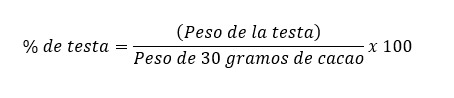
Percentage of head and cotyledon
To determine this variable, 30 grams of dried and fermented cocoa almonds were randomly selected, using the following formula. 15
Equation 1. Determination of the test and cotyledon
Grain storage
The almonds were stored in paper bags in a cool space whose internal moisture of the kernels exiled in a 7-8 %, to preserve the physical quality of the cocoa beans (3).
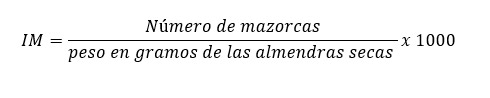
This variable refers to the number of ears needed (20 ears) to obtain 1 kg of dried cocoa, the harvest according to the treatments and the stages of maturity was determined by the following formula (7).
Physical quality of cocoa almonds
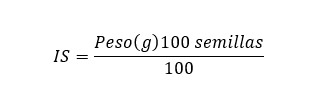
100 fermented and dried cocoa beans were taken at random, which also had to be weighed on an analytical scale to calculate the percentage in grams. This procedure was performed prior to the cut-off test, using the following formula for this calculation: 16
 Cut Test
100 cocoa beans were randomly selected, weighed on a precision analytical scale, and a cross-section was made to visually check their classification, either as well fermented, moderately fermented, violet, slate, total well fermented and medium fermented. In this way, the effect of fermentation was evaluated through the application of a microbial consortium, fruit extract and yeasts, following the guidelines of the INEN 176 Standard. 17
Volume of cocoa almonds in 100 grams
Random samples were taken from the respective samples of cocoa almonds, which were weighed on a scale until 100 grams were obtained, then the number of cocoa almonds that had completed the 100 grams was recorded (7).
After drying, the humidity percentage, which varies between 7 % and 8 %, was measured using a portable hygrometer (AGRATRONIX). To perform the measurement, the electrode must be connected to the socket and placed in contact with the cocoa almonds, using approximately 8 almonds needed for the sample. Press the white measuring button and read the value on the scale; at the end, the white button of the hygrometer must be released and the procedure repeated according to the treatments and repetitions, in accordance with the INEN 173 standard. 18, 19
To carry out the sensory analysis, he did make cocoa paste from each of the 12 treatments carried out. The samples were carefully melted in a water bath to preserve their aromatic compounds and 5 g portions were served in coded glasses.
The evaluation was carried out by a panel of 10 semi-trained judges previously familiar with the sensory profile of cocoa, each of them evaluated the samples following a structured tasting guide that included parameters such as aroma, flavor, acidity, bitterness, astringency, persistence and general balance. This procedure allowed reliable and consistent results to be obtained, accurately reflecting the sensory differences between treatments.
Heavy Metal (Cadmium) Analysis
This analysis was performed exclusively in the control treatment and in the treatment that presented the best microbial induction according to the physical parameters of grain quality was treatment 12. These analyses were performed on the paste as well as on the cocoa husk, in order to compare the distribution of the metal in both reactions of the bean European Commission 20. To this end, a representative sample was sent to the AGRORUM certified laboratory.
Results
Temperature variation in cocoa fermentation
The temperature values recorded during cocoa fermentation showed significant differences according to the application of microorganisms, enzymatic extract and yeasts, recorded in Table 2.
The increase in temperature during fermentation is a key factor for the degradation of precursor compounds of the aroma and flavor of cocoa. According to Greengreen (2021), the microbial activity in cocoa fermentation generates heat as a result of aerobic and anaerobic metabolism, which favors the development of desirable sensory characteristics. The results obtained in this study coincide with their findings, since treatments with a greater presence of enzymatic extract and yeasts reached higher temperatures, suggesting greater biological activity.
In addition, the studies of Roser et al., 22 highlight that the thermal increase during fermentation is related to the proliferation of yeasts and lactic acid bacteria, which transform the mucilage compounds and generate ethanol, acids and heat. In this sense, the treatments with high concentrations of yeasts in the present study could have stimulated this activity, favoring a more efficient fermentation process.
According to Núñez et al., 23 point out that an optimal temperature during fermentation ranges from 40 °C to 45 °C, as lower temperatures can slow down the degradation of sugars and the generation of aromatic compounds, while excessive temperatures can affect the viability of beneficial microorganisms. In this study, treatments with 3,0% enzyme extract and 6,0 % – 8,0 % yeasts reached these ranges, suggesting that their application may optimize the development of desirable sensory profiles in fermented cacao.
Table 2. Temperature during the cocoa fermentation process (Theobroma cacao L.)
| Factor | Variable Temperature | ||||||||||||||||||||||||||||||||
| Treat | Description | 24 hours | 48 hours | 72 hours | 96 hours | ||||||||||||||||||||||||||||
| 1 | 1.5 % CB + 6.0 % EEUv + 4.0 % LEVS | 32 | e | 36 | e | 37 | e | 39 | e | ||||||||||||||||||||||||
| 2 | 1.5 % CB + 6.0 % EEUv + 6.0 % LEVS | 35 | d | 36 | d | 38 | d | 39 | d | ||||||||||||||||||||||||
| 3 | 1.5 % CB + 6.0 % EEUv + 8.0 % LEVS | 35 | d | 35 | d | 37 | d | 39 | d | ||||||||||||||||||||||||
| 4 | 1.5 % CB + 6.0 % EEUv + 4.0 % LEVS | 35 | d | 38 | c | 40 | c | 41 | c | ||||||||||||||||||||||||
| 5 | 1.5 % CB + 6.0 % EEUv + 6.0 % LEVS | 38 | c | 39 | c | 41 | b | 41 | c | ||||||||||||||||||||||||
| 6 | 1.5 % CB + 6.0 % EEUv + 8.0 % LEVS | 39 | b | 41 | b | 41 | b | 44 | a | ||||||||||||||||||||||||
| 7 | 3.0 % CB + 6.0 % EEMz + 4.0 % LEVS | 32 | e | 36 | e | 38 | e | 40 | e | ||||||||||||||||||||||||
| 8 | 3.0 % CB + 6.0 % EEMz + 6.0 % LEVS | 36 | d | 36 | d | 37 | e | 39 | e | ||||||||||||||||||||||||
| 9 | 3.0% CB + 6.0% EEMz +8.0% LEVS | 36 | d | 39 | c | 41 | b | 39 | d | ||||||||||||||||||||||||
| 10 | 3.0 % CB + 6.0 % EEMz + 4.0 % LEVS | 37 | c | 39 | c | 41 | b | 41 | c | ||||||||||||||||||||||||
| 11 | 3.0 % CB + 6.0 % EEMz + 6.0 % LEVS | 39 | b | 42 | a | 44 | a | 48 | a | ||||||||||||||||||||||||
| 12 | 3.0% CB + 6.0% EEMz + 8.0% LEVS | 39 | b | 43 | a | 44 | a | 48 | a | ||||||||||||||||||||||||
| EEM ± | 0,17 | 0,11 | 0,42 | 0,41 | |||||||||||||||||||||||||||||
| CV (%) | 0,21 | 0,12 | 0,02 | 0,11 | |||||||||||||||||||||||||||||
* Means with different letters show statistically significant differences from each other, according to Tukey’s test (P≤0.05).
*EEM- Standard error of the mean, CV= Coefficient of variation, CB= Bacterial Consortium, EEUv= Enzymatic Grape Extract, EEMz = Enzymatic Apple Extract, LEVS= Dry Yeast
Influence of cocoa fermentation on total soluble solids
During the fermentation process, a progressive decrease in total soluble solids (TSS) values was observed in all treatments, indicated in Table 3.
In the initial phase, the values were similar, with an average of 22,00 °Brix in what are total soluble solids. As fermentation progressed, treatments with higher concentrations of yeasts and enzymatic extract showed a more accelerated reduction in soluble solids, reaching the lowest values at the end of the process.
The reduction in total soluble solids (°Brix) during fermentation is a key indicator of sugar consumption by microorganisms. According to Intriago et al.,24 the activity of yeasts such as Saccharomyces cerevisiae is responsible for the conversion of simple sugars into ethanol and organic acids, which significantly reduces the values of soluble solids in the cocoa pulp. In this study, treatments with higher concentrations of yeast and enzyme extract showed a faster decrease in total soluble solids, indicating a more active metabolism.
In addition, the findings coincide with the results obtained by Rodríguez et al., 6 who state that the enzymatic activity of yeasts and lactic acid bacteria is essential for the breakdown of carbohydrates present in cocoa pulp. The more accelerated reduction in enzymatic extract and yeast treatments suggests that these compounds facilitated the conversion of sugars into fermentative products, accelerating mucilage degradation.
Likewise, Alvarado et al., 8 highlighted that the decrease in total soluble solids values is associated with the efficiency of the fermentation process and the quality of cocoa. In their study, high temperatures and controlled fermentation with the addition of yeasts and enzymatic extract favored the rapid reduction of sugars, improving the development of aroma and flavor precursors. In the present study, treatments with a greater reduction in total soluble solids were also those that reached higher temperatures, suggesting a relationship between these two factors in fermentation dynamics.
Table 3. Total Soluble Solids during the cocoa fermentation process (Theobroma cacao L.)
| Factor | Variable SST (°Brix) | |||||||||||||||||||||||
| Trat. | Description | 0 Hours | 24 Hours | 48 Hours | 72 Hours | 96Hours | ||||||||||||||||||
| 1 | 1.5 % CB + 6.0 % EEUv + 4.0 % LEVS | 22, 00 | aa | 18,00 | a | 16,00 | a | 15,00 | a | 12,00 | a | |||||||||||||
| 2 | 1.5 % CB + 6.0 % EEUv + 6.0 % LEVS | 21,00 | a | 18,00 | a | 15,00 | b | 14,00 | b | 10,00 | b | |||||||||||||
| 3 | 1.5 % CB + 6.0 % EEUv + 8.0 % LEVS | 22,00 | a | 17,00 | b | 14,00 | c | 13,00 | b | 10,00 | b | |||||||||||||
| 4 | 1.5 % CB + 6.0 % EEUv + 4.0 % LEVS | 22,00 | a | 18,00 | a | 14,00 | c | 13,00 | b | 10,00 | b | |||||||||||||
| 5 | 1.5 % CB + 6.0 % EEUv + 6.0 % LEVS | 22,00 | a | 15,00 | e | 12,00 | e | 11,00 | c | 9,00 | b | |||||||||||||
| 6 | 1.5 % CB + 6.0 % EEUv + 8.0 % LEVS | 22,00 | a | 14,00 | f | 13,00 | d | 10,00 | c | 7,00 | d | |||||||||||||
| 7 | 3.0 % CB + 6.0 % EEMz + 4.0 % LEVS | 22,00 | a | 18,00 | a | 15,00 | b | 14,00 | b | 11,00 | a | |||||||||||||
| 8 | 3.0 % CB + 6.0 % EEMz + 6.0 % LEVS | 21,00 | a | 17,00 | b | 15,00 | b | 13,00 | b | 11,00 | a | |||||||||||||
| 9 | 3.0% CB + 6.0% EEMz +8.0% LEVS | 22,00 | a | 17,00 | b | 12,00 | e | 13,00 | b | 11,00 | a | |||||||||||||
| 10 | 3.0 % CB + 6.0 % EEMz + 4.0 % LEVS | 22,00 | a | 16,00 | c | 12,00 | e | 10,00 | c | 8,00 | c | |||||||||||||
| 11 | 3.0 % CB + 6.0 % EEMz + 6.0 % LEVS | 22,00 | a | 14,00 | f | 11,00 | f | 9,00 | c | 7,00 | d | |||||||||||||
| 12 | 3.0% CB + 6.0% EEMz + 8.0% LEVS | 22,00 | a | 14,00 | f | 10,00 | g | 8,00 | d | 5,00 | d | |||||||||||||
| EEM ± | 0,33 | 0,16 | 0,28 | 0,41 | 0,27 | |||||||||||||||||||
| CV (%) | 4,29 | 0,21 | 0,12 | 0,02 | 0,11 | |||||||||||||||||||
* Averages with different letters show statistically significant differences from each other, according to Tukey’s test P≤0.05).
EEM- Standard error of the mean, CV= Coefficient of variation, CB= Bacterial Consortium,
EEUv = Enzymatic Grape Extract, EEMz = Enzymatic Apple Extract, LEVS= Dried Yeast
pH variation on cocoa fermentation
Initially, the values ranged between 3,78 and 3,90, with little marked differences between treatments. However, as the process progressed, a significant increase in pH values was evidenced, especially in those treatments that included higher concentrations of bacterial consortium, enzyme extract and yeast.
During the process, a progressive increase in pH values was observed in all treatments, as can be seen in Table 4.
The progressive increase in pH is an expected phenomenon in these processes, since microorganisms generate basic compounds that neutralize the acids initially present. According to Portillo et al. 25, the activity of yeasts and lactic acid bacteria plays a fundamental role in pH variation, as they convert organic acids into less acidic compounds as the process progresses Vera et al.26. This behavior is consistent with the values observed in treatments with higher concentrations of yeasts, where the final pH reached levels above 5,50.
Additionally, Abreu et al.3 pointed out that the increase in pH is associated with the intensity of the process, highlighting that higher levels of this parameter may be related to greater microbial activity and better conditions for the transformation of the compounds present . In this context, the results obtained show that the treatments with the highest content of yeast and enzymatic extract were the ones that reached the highest pH values, which agrees with the literature and confirms that these variables influence the dynamics of the process, the use of the bacterial consortium and enzymatic extract can significantly modify this parameter, with possible implications for the quality and final characteristics of the process.
Table 4. pH during the cocoa fermentation process (Theobroma cacao L)
| Factor | Variable pH | ||||||||||||||
| Tratt | Description | 0 Hours | 24 Hours | 48 Hours | 72 Hours | 96Hours | |||||||||
| 1 | 1.5 % CB + 6.0 % EEUv + 4.0 % LEVS | 3,88 | a | 4,00 | b | 4,25 | b | 4,35 | b | 4,54 | b | ||||
| 2 | 1.5 % CB + 6.0 % EEUv + 6.0 % LEVS | 3,85 | a | 4,00 | b | 4,41 | b | 4,55 | b | 4,61 | b | ||||
| 3 | 1.5 % CB + 6.0 % EEUv + 8.0 % LEVS | 3,78 | a | 4,00 | b | 4,44 | b | 4,52 | b | 4,61 | b | ||||
| 4 | 1.5 % CB + 6.0 % EEUv + 4.0 % LEVS | 3,88 | a | 4,37 | b | 4,45 | b | 4,55 | b | 4,62 | b | ||||
| 5 | 1.5 % CB + 6.0 % EEUv + 6.0 % LEVS | 3,90 | a | 4,76 | c | 4,54 | b | 4,63 | bc | 5,52 | c | ||||
| 6 | 1.5 % CB + 6.0 % EEUv + 8.0 % LEVS | 3,90 | a | 4,00 | b | 4,55 | b | 4,65 | bc | 5,55 | c | ||||
| 7 | 3.0 % CB + 6.0 % EEMz + 4.0 % LEVS | 3,88 | a | 4,00 | b | 4,31 | b | 4,34 | b | 4,42 | b | ||||
| 8 | 3.0 % CB + 6.0 % EEMz + 6.0 % LEVS | 3,87 | a | 4,00 | b | 4,46 | b | 4,51 | b | 4,67 | bc | ||||
| 9 | 3.0% CB + 6.0% EEMz +8.0% LEVS | 3,87 | a | 4,25 | b | 4,44 | b | 4,52 | b | 4,60 | b | ||||
| 10 | 3.0 % CB + 6.0 % EEMz + 4.0 % LEVS | 3,80 | a | 4,54 | b | 4,55 | b | 4,56 | bc | 5,01 | c | ||||
| 11 | 3.0 % CB + 6.0 % EEMz + 6.0 % LEVS | 3,80 | a | 4,79 | c | 4,94 | c | 5,12 | c | 5,52 | c | ||||
| 12 | 3.0% CB + 6.0% EEMz + 8.0% LEVS | 3,82 | a | 4,90 | c | 5,17 | c | 5,22 | c | 5,60 | c | ||||
| EEM ± | 1,21 | 0,76 | 1,14 | 0,81 | 0,77 | ||||||||||
| CV (%) | 2,49 | 0,41 | 0,03 | 0,19 | 0,17 | ||||||||||
*Averages with different letters show statistically significant differences from each other, according to Tukey’s test P ≤ 0.05).
EEM- Standard error of the mean, CV= Coefficient of variation, CB= Bacterial Consortium,
EEUv = Enzymatic Grape Extract, EEMz = Enzymatic Apple Extract, LEVS= Dried Yeast
Physical characteristics in cocoa almonds with induction of fermentation
The results show significant variations in the cut-off test depending on the proposed treatments, shown in Table 5.
The shear test is a fundamental method for evaluating the quality of the process, as it allows the degree of transformation of the product to be identified. According to Sánchez et al 15, the variation in the shear test is influenced by microbial activity, temperature, and fermentation time, factors that directly affect the degradation of compounds and the conversion of flavor and aroma precursors Teneda et al 7 In this sense, treatments with higher concentrations of yeasts and enzymatic extract showed a higher proportion of good fermentation and a significant reduction of violet grains, suggesting that these factors optimize the transformation of the product.
Finally, according to Pargon 28, humidity is a determining factor in the final quality of the product, as it affects stability and conservation. In this study, the humidity values were kept within an adequate range, suggesting that the applied process allowed efficient control of this parameter. These findings show the importance of the combination of factors in the optimization of the process, showing that the addition of microorganisms and enzymatic extract can significantly improve the quality of the final product.
Table 5. Physical characteristics in cocoa almonds (Theobroma cacao L.)
| Factor | Cut Test | |||||||||||||||||||
| Treat. | Description | %Testa | %Cotyledon | Good Fermentation | Medium Fermentation | Violets | Humidity | |||||||||||||
| 1 | 1.5 % CB + 6.0 % EEUv + 4.0 % LEVS | 20,00 | b | 80,00 | b | 5,00 | c | 70,00 | d | 25,00 | a | 7,87 | a | |||||||
| 2 | 1.5 % CB + 6.0 % EEUv + 6.0 % LEVS | 10,00 | d | 90,00 | a | 0,00 | c | 70,00 | d | 30,00 | b | 7,91 | b | |||||||
| 3 | 1.5 % CB + 6.0 % EEUv + 8.0 % LEVS | 10,00 | d | 90,00 | a | 25,00 | b | 75,00 | d | 0,00 | c | 7,13 | b | |||||||
| 4 | 1.5 % CB + 6.0 % EEUv + 4.0 % LEVS | 16,67 | c | 83,33 | b | 5,00 | c | 70,00 | d | 25,00 | a | 7,25 | b | |||||||
| 5 | 1.5 % CB + 6.0 % EEUv + 6.0 % LEVS | 13,33 | c | 86,67 | b | 77,00 | d | 16,00 | a | 7,00 | c | 7,05 | b | |||||||
| 6 | 1.5 % CB + 6.0 % EEUv + 8.0 % LEVS | 13,33 | c | 86,67 | b | 82,00 | d | 14,00 | a | 4,00 | c | 7,00 | b | |||||||
| 7 | 3.0 % CB + 6.0 % EEMz + 4.0 % LEVS | 23,33 | a | 76,67 | c | 10,00 | a | 60,00 | d | 30,00 | b | 8,00 | a | |||||||
| 8 | 3.0 % CB + 6.0 % EEMz + 6.0 % LEVS | 10,00 | d | 90,00 | a | 25,00 | b | 70,00 | d | 20,00 | b | 7,77 | b | |||||||
| 9 | 3.0% CB + 6.0% EEMz +8.0% LEVS | 10,00 | d | 90,00 | a | 25,00 | b | 50,00 | c | 25,00 | b | 7,10 | b | |||||||
| 10 | 3.0 % CB + 6.0 % EEMz + 4.0 % LEVS | 16,67 | c | 83,33 | b | 25,00 | b | 55,00 | c | 20,00 | b | 7,07 | b | |||||||
| 11 | 3.0 % CB + 6.0 % EEMz + 6.0 % LEVS | 13,33 | c | 86,67 | b | 90,00 | a | 9,00 | c | 1,00 | d | 7,03 | b | |||||||
| 12 | 3.0% CB + 6.0% EEMz + 8.0% LEVS | 13,33 | c | 86,67 | b | 89,00 | a | 11,00 | c | 0,00 | d | 7,00 | b | |||||||
| EEM ± | 0,13 | 0,30 | 0,32 | 0,76 | 0,17 | 0,19 | ||||||||||||||
| CV (%) | 4,16 | 1,03 | 0,85 | 0,75 | 0,58 | 2,81 | ||||||||||||||
* Averages with different letters show statistically significant differences from each other, according to Tukey’s test P ≤ 0,05).
EEM- Standard error of the mean, CV= Coefficient of variation, CB= Bacterial Consortium,
EEUv = Enzymatic Grape Extract, EEMz = Enzymatic Apple Extract, LEVS= Dried Yeast
Fermentative influence on the sensory characteristics of cocoa paste
The results of the sensory analysis of the cocoa paste show significant differences between the treatments evaluated, as can be seen in Table 6.
Regarding aroma, the highest values were found in the T6 treatments with 1,5 % microbial consortium, 6,0 % enzymatic grape extract and 8,0 % dry yeast and the T11 and T12 treatments with 3,0 % microbial consortium, 6,0 % apple enzymatic extract and 6,0 and 8,0 % dry yeast reaching scores of up to 5,00 while the treatments without the addition of these factors presented lower values, around 3,00.
Sensory analysis is a key tool for assessing the quality of fermented and processed cocoa. According to Intriago et al 29, fermentation influences the formation of volatile compounds and flavor precursors, which explains the differences in aroma, intensity, and bitterness between treatments. The results obtained confirm this relationship, since treatments with higher concentrations of microorganisms and enzymatic extract showed improved sensory profiles.
In addition, Reynerl and Loor 30, they note that the microbial composition during fermentation modulates the color profile and the formation of key metabolites in the sensory quality of cocoa. In this study, treatments with greater addition of yeasts and enzymatic extract presented more intense colors and greater acceptability in terms of attributes such as aroma intensity and flavor, which supports the influence of these factors on the final quality of the product. The importance of fermentation control and the addition of microorganisms to improve the sensory properties of the cocoa paste, allowing for more pleasing and consistent profiles in the final product.
Table 6. Sensory analysis of cocoa paste (Theobroma cacao L.)
| Factor | Sensory analysis | ||||||||||||||||
| Treat. | Description | Aroma | Acidity | Bitterness | Cocoa | Nuts | Floral | Int. of taste | Color | ||||||||
| 1 | 1.5 % CB + 6.0 % EEUv + 4.0 % LEVS | 3,00 | c | 3,00 | a | 4,56 | b | 2,50 | b | 1,00 | c | 3,00 | b | 3,00 | b | 3,60 | b |
| 2 | 1.5 % CB + 6.0 % EEUv + 6.0 % LEVS | 3,28 | c | 2,00 | a | 3,00 | b | 3,00 | a | 3,00 | b | 4,50 | b | 5,00 | a | 4,20 | b |
| 3 | 1.5 % CB + 6.0 % EEUv + 8.0 % LEVS | 3,92 | c | 2,00 | b | 4,00 | b | 3,00 | a | 4,40 | b | 3,00 | b | 4,00 | b | 4,00 | b |
| 4 | 1.5 % CB + 6.0 % EEUv + 4.0 % LEVS | 3,28 | c | 0,75 | a | 4,00 | a | 3,00 | a | 2,00 | c | 2,50 | c | 2,72 | c | 3,40 | b |
| 5 | 1.5 % CB + 6.0 % EEUv + 6.0 % LEVS | 4,20 | b | 1,00 | b | 5,00 | a | 4,80 | a | 5,00 | a | 5,00 | a | 5,00 | a | 5,00 | a |
| 6 | 1.5 % CB + 6.0 % EEUv + 8.0 % LEVS | 5,00 | a | 1,00 | c | 5,00 | a | 4,92 | a | 4,75 | b | 4,80 | b | 4,50 | a | 5,00 | a |
| 7 | 3.0 % CB + 6.0 % EEMz + 4.0 % LEVS | 3,28 | c | 2,00 | b | 3,00 | b | 3,00 | a | 3,00 | b | 3,00 | b | 2,00 | c | 4,50 | a |
| 8 | 3.0 % CB + 6.0 % EEMz + 6.0 % LEVS | 3,80 | c | 2,00 | b | 4,00 | b | 3,00 | b | 4,40 | b | 3,00 | b | 4,00 | b | 4,00 | b |
| 9 | 3.0% CB + 6.0% EEMz +8.0% LEVS | 3,50 | c | 0,75 | a | 4,00 | a | 3,00 | a | 2,00 | c | 2,50 | c | 2,50 | c | 3,40 | b |
| 10 | 3.0 % CB + 6.0 % EEMz + 4.0 % LEVS | 4,20 | b | 0,50 | b | 5,00 | a | 4,80 | a | 5,00 | a | 5,00 | a | 5,00 | a | 5,00 | a |
| 11 | 3.0 % CB + 6.0 % EEMz + 6.0 % LEVS | 5,00 | a | 0,50 | c | 5,00 | a | 4,92 | a | 4,00 | b | 4,80 | b | 4,50 | a | 5,00 | a |
| 12 | 3.0% CB + 6.0% EEMz + 8.0% LEVS | 5,00 | a | 0,50 | c | 5,00 | a | 5,00 | a | 5,00 | a | 4,50 | b | 4,50 | a | 5,00 | a |
| EEM ± | 0,04 | 0,02 | 0,02 | 0,04 | 0,05 | 0,04 | 0,04 | 0,05 | |||||||||
| CV (%) | 5,67 | 4,33 | 3,50 | 7,72 | 10,57 | 6,37 | 5,66 | 9,09 | |||||||||
* Means with different letters show statistically significant differences from each other, according to Tukey’s test (P ≤ 0,05).
EEM- Standard error of the mean, CV= Coefficient of variation, CB= Bacterial Consortium,
Int. Intensity, EEUv= Enzymatic Grape Extract, EEMz = Enzymatic Apple Extract, LEVS= Dried Yeast
Cadmium content under the effect of fermentation on the testa and cocoa paste
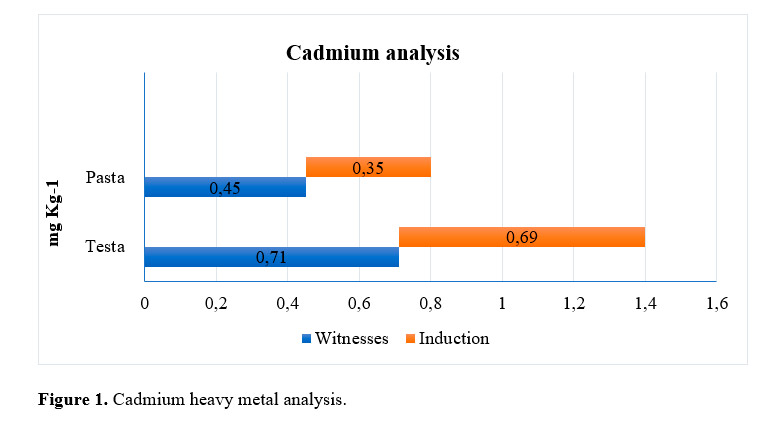
According to the control treatment (T1), the cadmium content in the cocoa paste was 0,45 mg/kg, while in the treatment with bacterial consortium induction, enzyme extract, and yeast (T12), this concentration decreased to 0,35 mg/kg, reflecting a significant improvement in cadmium reduction. Regarding the almond shell, a slight decrease in cadmium content was also observed, going from 0,71 mg/kg in the control (T1) to 0,69 mg/kg in the treatment with microorganisms and enzyme extract (T12). These values were compared with the limits established in Regulation (EC) No 1323/2021 of the European Union, which regulates the maximum levels of cadmium in cocoa products, ensuring that the concentration of this heavy metal is within safe parameters for human consumption, as can be seen in Figure 1.
The reduction of cadmium content in cocoa paste after the application of the bacterial consortium and enzymatic extract may be related to the ability of certain microorganisms to bioadsorb heavy metals or alter their mobility in the bean during fermentation. According to Santander et al 31, various microorganisms have the ability to immobilize heavy metals through biosorption or bioaccumulation processes, which reduces their availability in fermented products.
In addition, Chancay et al 32 they reported that fermentation with specific yeasts and enzyme extracts can modify the chemical composition of the bean, promoting the formation of cadmium complexes and facilitating their elimination in the mucilage or in the head of cocoa almonds, Batallas et al 33. This is consistent with the results obtained, where a greater reduction of cadmium in the paste was observed compared to the testa.
On the other hand, Furcal and Torres 34 they indicated that the reduction of cadmium in cocoa products may be due to the interaction between the acidity generated during fermentation and the solubility of the metal, promoting its leaching or precipitation in less bioavailable forms. 27
Figure 1. Cadmium heavy metal analysis.
Conclusions
Treatments with high concentrations of bacterial consortia, yeasts and fruit extracts significantly improved the physical characteristics of cocoa during fermentation, optimizing bean quality, reducing violets and controlling humidity.
The treatment with a higher concentration of bacterial consortium and dry yeast improved attributes such as aroma, bitter taste and color. Another treatment with lower concentrations achieved balanced sensory development.
In addition, a slight reduction of cadmium was observed in the cocoa paste and testa, indicating that the additives contribute to the improvement of product safety.
Author Contributions: «Conceptualization, V.E.B.R., L.A.P.T. and K.E.A.V.; methodology, V.E.B.R., L.A.P.T. and M.G.M.Y.; software, M.G.M.Y.; validation, E.B.R., L.A.P.T. and G.A.J.L.; formal analysis, K.E.A.V. and M.G.M.Y.; investigation, V.E.B.R., L.A.P.T., D.M.C.B. and E.D.Y.B.; resources, G.A.J.L. and J.M.P.M.; data curation, , D.M.C.B. and E.D.Y.B.; writing—original draft preparation, K.E.A.V. and V.E.B.R.; writing—review and editing, K.E.A.V., M.M.P.M. and L.A.P.T.; visualization, M.G.M.Y. and K.E.A.V.; supervision, G.A.J.L. and M.M.P.M.; project administration, V.B.R.; funding acquisition, L.AP.T. and M.G.M.Y.
Funding: «This research received no external funding,»
Institutional Review Board Statement: «Not applicable.»
Informed Consent Statement: This study was conducted under standard agricultural research practices using plant material of Theobroma cacao L. No human participants or experimental animals were involved at any stage of the research. All procedures complied with institutional and national guidelines for agricultural experimentation and environmental safety. Therefore, ethical approval and informed consent were not required.
Data Availability Statement: This section provides details regarding where data supporting reported results can be found, including links to publicly archived datasets analyzed or generated during the study. Please refer to the suggested Data Availability Statements in the «Bionatura Research Data Policies» section at https://www.revistabionatura.com/policies.html. You might exclude this statement if the study did not report any data.
Conflicts of Interest: The authors declare that they have no competing interests.
Acknowledgments: The authors would like to thank the Agricultural Center of the Quevedo canton for allowing this research to be carried out in their facilities
References [Vancouver]
- Abad A, Acuña C, Naranjo E. El cacao en la Costa ecuatoriana: estudio de su dimensión cultural y económica. Estud la Gestión Rev Int Adm [Internet]. 2019;7(7):59–83. Available from: file:///C:/Users/Usuario_Cx/Downloads/1442-Artículo-4925-1-10-20200615.pdf
- Montilla A de J, Alvarado-Moreno M, De La Torre-Burgos HA. Alternativas para fomentar y fortalecer el agroturismo en el Ecuador. Rev Ciencias Agropecu ALLPA. 2023;6(12):12–24.
- Abreu G, Arujo Q, Valle R, Sodré G, Souza S. Influencia de factores agroambientales sobre la calidad del clon de cacao (Theobroma cacao L.) PH-16 en la región cacaotera de Bahia, Brasil. Ecosistemas y Recur Agropecu. 2021;4(12):579–87.
- Villamil J, Viteri S, Villegas W. Aplication of microbial ntagonist for the biological control of Moniliophthora roreri Cif & Parc in Theobroma cacao L. under field conditions. J Natl Fac Agron Medellin. 2021;68(1):7441–50.
- Méndez LAR. El cultivo del cacao venezolano a partir de Maruma. Hist Caribe. 2015;10(27):69–101.
- Rodríguez N, Chávez B, Gómez I, Vásquez M, Estrada P. El cultivo del cacao, sus características y su asociación con microorganismos durante la fermentación. Alianzas y tendencias BUAP. 2022;7(25):36–51.
- Vera J, Vallejo C, Párraga Moran D, Morales Rodríguez W, Macias Véliz J, Ramos Ramache R. Atributos físicos-químicos y sensoriales de las almendras de quince clones de cacao Nacional (Theobroma cacao L.) en el Ecuador. Cienc y Tecnol [Internet]. 2018;7(2):21–34. Available from: https://revistas.uteq.edu.ec/index.php/cyt/article/view/139/153
- Alvarado K, Rivadeneira C, Intriago F. Utilización de extracto natural del Muicle (Justicia spicigera) en la elaboración de chocolate a partir de dos variedades de cacao (Theobroma bicolor Humb. & Bonpl. y Theobroma cacao L.). Rev Agrotecnológica Amaz [Internet]. 2024 Jan 10;4(1):e633. Available from: https://revistas.unsm.edu.pe/index.php/raa/article/view/633
- Morejon R, Vera J, Salgada I, Flores C, Morejón M. Use of enzymes and leavening agents as a strategy to reduce the presence of cadmium in the fermetation process of Theobroma cacao L. almonds. J Pharm Negat Results [Internet]. 2022;13(3):604–14. Available from: https://pnrjournal.com/index.php/home/article/view/672
- Garcia E, Ochoa A, Montalvo C, Ordoñez G, Londoño L. Sucesión microbiana durante la fermentación espontánea de cacao en unidades productivas. Cienc en Desarro. 2021;12(2):21–30.
- Alvarado K, Vera J, Tuarez D, Intriago F. Fermentación de cacao ( Theobroma cacao L .) con adición de levadura ( Saccharomyces cerevisiae ) y enzima ( PPO ´ s ) en la disminución de metales pesados. Centrosur [Internet]. 2022;2014(1):24. Available from: https://centrosuragraria.com/index.php/revista/article/view/191/399
- Reyes C, Muñoz M. Calidad de vida y sobrecarga en cuidadores de escolares con discapacidad intelectual. Interdiscip Rev Psicol y Ciencias Afines [Internet]. 2019;36(1). Available from: http://www.ciipme-conicet.gov.ar/ojs/index.php/interdisciplinaria/article/view/597/110
- Álvarez, Liconte N, Pérez E, Lares M, Perozo J. Revisión sobre los atributos físicos , químicos y sensoriales como indicadores de la calidad comercial del cacao. Rev Crítica Transdiscipl. 2022;5(1):12–25.
- Heredia J, Rueda Gómez J, Talero Sarmiento L, Ramírez Acuña J, Coronado Silva R. Determinación de la madurez de mazorcas de Cacao, haciendo uso de redes neuronales convolucionales en un sistema embebido. Rev Colomb Comput. 2022;21(2):42–55.
- Sanchez M, Vargas Y, Burbano R. Evaluation of the Cocoa Bean (Theobroma Cacao L.), using Two Fermentators, Orellana and Sucumbios Provinces, Ecuador. Int J Eng Res Technol [Internet]. 2019;08(7):278–83. Available from: https://repositorio.iniap.gob.ec/bitstream/41000/5389/3/Sanchez et al%281%29.pdf
- Solórzano R, Casanova Mendoza T, Plaza Avellán L. Mejoramiento y homologación de los procesos y protocolos de investigación, validación y producción de servicios en cacao y café. INIAP [Internet]. 2016;(433):21–30. Available from: https://repositorio.iniap.gob.ec/handle/41000/4392
- INEN. Granos de cacao. Requisitos NTE INEN 176-5. Norma Técnica Ecuatoriana. 2018;5:8.
- Tinoco HA, Ospina DY. Análisis del proceso de deshidratación de cacao para la disminución del tiempo de secado. Rev EIA [Internet]. 2018;13:53–63. Available from: http://www.scielo.org.co/scielo.php?script=sci_arttext&pid=S1794-12372010000100005
- INEN. NTE INEN 173 Cacao en grano. Determinación de la humedad. Inst Ecuatoriano Norm [Internet]. 1989;1–3. Available from: https://www.normalizacion.gob.ec/buzon/normas/173.pdf
- Comisión Europea. Reglamento (UE) 2021/1323. D Of la Unión Eur. 2021;10(1):13–8.
- Verdezoto DC. Aislamiento e identificación de bacterias ácido lácticas (BAL) presentes en el mucílago de cacao(Theobroma cacao.L) Trinitario y Nacional [Internet]. Universidad Técnica Estatal de Quevedo; 2021. Available from: https://repositorio.uteq.edu.ec/bitstream/43000/2285/1/T-UTEQ-0048.pdf
- Roser A, Jiménez J, López D, Rodríguez G, Saltos M. Agrociencias, Investigación Y Sostenibilidad. In: Perez F, editor. Colección libros de texto Universidad Técnica de Manabí [Internet]. Universida. INIAP; 2021. p. 117–28. Available from: https://repositorio.iniap.gob.ec/bitstream/41000/5337/1/iniaptpc7.pdf
- Núñez O, Cruz S, Velástegui G, Almeida R, Salazar D. Comportamiento de los índices productivos de cuyes ( Cavia porcellus) bajo tres niveles de cascarilla de cacao ( Theobroma cacao ). J Selva Andin Anim Sci [Internet]. 2018 Apr 1;5(1):14. Available from: https://jsaas.sars.org.bo/index.php/a/es/article/view/52
- Intriago F, Cedeño J, Parraga C, Alvarado K, Revilla K, Aldas J. Inducción de microorganismos eficaces (EM) en la masa fermentativa del cacao (Theobroma cacao L.) y su incidencia las características físico química y antioxidante. Biotecnia [Internet]. 2024 Nov 27;26:8. Available from: https://biotecnia.unison.mx/index.php/biotecnia/article/view/2422
- Portillo E, Labarca M, Grazziani L, Cros E, SEEMAT S, Davrieux F, et al. Formación del aroma del cacao Criollo (Theobroma cacao L.) en función del tratamiento poscosecha en Venezuela Aroma. Rev Cient UDO Agric [Internet]. 2019;9(2):458–68. Available from: http://udoagricola.orgfree.com/V9N2UDOAg/V9N2Portada.htm
- Vera J, Jiménez W, Naula M, Villa U, Zaruma F, Montecé G, et al. Residuos de la producción de cacao (Theobroma cacao L.) como alternativa alimenticia para rumiantes. Rev Colomb Cienc Anim – RECIA. 2021;13(2):e839.
- Teneda W, Guamán M, Oyaque S. Exploración de la intención de consumo de la Cascarilla de cacao (Theobroma cacao L.) como infusión: caso Tungurahua-Ecuador. Cuad Contab [Internet]. 2019 Nov 28;20(50):1–14. Available from: https://revistas.javeriana.edu.co/index.php/cuacont/article/view/28102
- Pargon M. Perfiles de fermentación para contribuir con el mejoramiento de la calidad del cacao (Theobroma cacao L.) y con el desarrollo socioeconómico de la ecorregión de Lachuá, Coban, Alta… 2021.
- Intriago F, Zambrano M, Ramos J, Alvarado K. Actividad antioxidante y contenido fenólico de la cascarilla de cacao variedad CCN-51 inducidos durante la fermentación con microorganismos eficientes. Rev Peru Investig Agropecu [Internet]. 2025 Oct 17;4(2):e97. Available from: https://revistas.unaaa.edu.pe/index.php/repia/article/view/97
- Reynerl V, Loor O. Tipos de secado de Theobroma Cacao L. y su efecto en la calidad organoléptica en Esmeraldas, Ecuador. Rev Alfa. 2021;2(4):31–49.
- Santander W, Garay R, Verde C, Mendieta O. Determinación del contenido de cadmio en suelos, frutos, granos fermentados y secos, licor de cacao y chocolate en zonas productoras de la Región San Martín. Rev la Soc Química del Perú. 2021;87(1):39–49.
- Chancay LF, Delgado Demera M, Salas Macías CA. Cadmio en el cultivo de cacao (Theobroma cacao L.) y sus efectos ambientales. La Técnica Rev las Agrociencias ISSN 2477-8982. 2022;91.
- Batallas M, Preciado M, Pesantez F. Evaluación de cadmio y plomo en almendras de cacao por espectroscopia de absorción atómica. Cienc Unemi. 2021;14(37):49–59.
- Furcal P, Torres J. Determinación de concentraciones de cadmio en plantaciones de Theobroma cacao L. en Costa Rica. Rev Tecnol en Marcha. 2020;33(1):122–37.
Received: [24 abril 2026] Accepted: [14 junio 2026] Published: [15 septiembre 2026]
Citation: Bastidas, V; Paredes, L; Alvarado, K; Macias, M; Jácome, G; Chávez, D; Yanez, E; Puente, M. Physical and sensory characteristics of Trinitario cocoa (Theobroma cacao L.) using microbial extracts from consortia, fruits and yeasts. Bionatura. 2026. Volumen 11, No 2. https://doi.org/10.70373/RB/2026.11.02.1
Peer review information: Bionatura thanks the anonymous reviewers for their contribution to the peer review of this work using https://reviewerlocator.webofscience.com/
All articles published by Bionatura Journal are freely and permanently accessible online immediately after publication, without subscription charges or registration barriers.
Publisher’s Note: Bionatura stays neutral concerning jurisdictional claims in published maps and institutional affiliations.
Copyright: © 2026 by the authors. Submitted for possible open access publication under the terms and conditions of the Creative Commons Attribution (CC BY) license (https://creativecommons.org/licenses/by/4.0/)
Vol11 No2 2026

INDEXADA EN















INDEXADA EN