

Vol 11 No 1 2026-5

Using L-arginine hydrochloride as a preservative for polymerase enzymes in room temperatures
Dr. Joseph Shenekji *1, Antonius AL-Daoud 2 , Abduljalil Ghrewati 1
1Faculty of technical Engineering – Dept. of Biotechnology Enginering, University of Aleppo, Syria josephshenekji94@gmail.com https://orcid.org/0009-0004-0683-1830 – drghrewati@gmail.com
2Atomic Energy Commission of Syria, Dept of Biotechnology, Damascus, Syria. aaldaoude@gmail.com
*Correspondence: josephshenekji94@gmail.com ;
https://doi.org/10.70373/RB/2026.11.01.5
Abstract
The preservation of DNA polymerases under ambient conditions remains a significant challenge, particularly in regions with limited access to cold storage. This study investigates the efficacy of L-arginine hydrochloride as a stabilizing agent for Pfu polymerase and polymerase mixtures stored in a 20 ul aliquots at different temperatures over 3 months. Enzyme activity was assessed via polymerase chain reaction (PCR) amplification of a 1250 base pair fragment. Results showed that Pfu polymerase retained enzymatic function when stored at 4°C, 25°C, and 37°C in the presence of 1M L-arginine hydrochloride, whereas enzyme activity was lost at 37°C without the stabilizer. The addition of L-arginine hydrochloride also enhanced the stability of Taq polymerase and Pfu + Taq mixtures, although to a lesser extent. Mechanistically, L-arginine hydrochloride likely prevents protein aggregation, improves solubility, and stabilizes enzyme structure through electrostatic interactions. These findings demonstrate the potential of L-arginine hydrochloride as an effective polymerase stabilizer, reducing dependency on cold chain logistics, thereby making molecular diagnostics and research more accessible in low-resource settings. This study advances the state of the art by providing an alternative enzyme preservation method that could lower costs and improve access to essential biochemical reagents in both clinical and research applications. Future work will focus on optimizing concentration conditions, assessing long-term stability beyond three months, and expanding the investigation to other thermostable polymerases.
Keywords
L-arginine hydrochloride, enzymes, polymerases, storage, Pfu, LAH
Introduction
Arginine which is in the form of L-arginine, is a vital amino acid, has emerged as a significant agent in preserving polymerase enzymes, particularly at room temperature, which addresses the critical need for stable biochemical reagents in research and industrial applications as mentioned by Pal et al. (2012).1
Its unique properties as a cationic preservative not only inhibit microbial growth but also enhance the stability and functional lifespan of polymerases, essential for nucleic acid synthesis and various biochemical processes according to Sepahi et al. (2017).2
This makes L-arginine and its derivatives, such as L-arginine hydrochloride (LAH) or arginine ethyl ester (LAE), notable in both food and pharmaceutical industries, where the maintenance of enzyme activity and product safety is paramount, as found by Zhao et al. (2024).3
The fact that arginine is natural amino acid in living organisms, makes it a favorable alternative to traditional preservatives, often associated with health concerns, by providing effective antimicrobial action without adverse effects on human health, in accordance to Bijle et al. (2021)4. The recommended usage concentrations of arginine derivatives vary, allowing flexibility across different applications, from food preservation to enzyme storage solutions, as said by Bijle et al. (2019).5
Research indicates that L-arginine derivatives significantly improve the storage stability of polymerase enzymes, permitting effective preservation at ambient temperatures, which could reduce reliance on low-temperature storage methods as it appeared with Arakawa et al. (2007)6. Which can help in providing the polymerase enzymes to low and middle-income countries for research purposes and development in biotechnology, and at the same time create a fairer distribution of molecular reagents and diagnostics in times of medical urgencies such as covid-19, where PCR reagents shipments and vaccines were challenging because of the need of cold chain supply that poses several challenges such as: Logistical Constraints that requires specialized equipment including freezers for -20°C, refrigerators, and cold packs. In many regions, particularly in developing countries, access to such infrastructure may be limited or unreliable. Transportation Difficulties and the challenging efforts to reach remote or underserved areas. finally, this preservation method could benefit with the environmental aspect, as it reduces the need of refrigeration in labs and cold-chain fright or regular shipment, as learned from Kim et al. (2016).7
Despite the promise shown by arginine-based preservatives, debates persist regarding their long-term efficacy and comparative advantage over synthetic alternatives. As research continues to explore the various applications and mechanisms of action, the role of L-arginine as a preservative highlights both its practical benefits and the need for ongoing investigation into its safety and effectiveness in diverse environments, this was mentioned by Agrillo et al. (2023).8
Materials and methods
Enzyme Preparation and preservation
Pfu DNA polymerase (1 unit/µl) was obtained from a locally manufactured enzyme in the AECS, expressed from a plasmid that was a gift from open bioecnomy lab in the university of cambridge called Pobl1 mentioned in Bhadra et al. (2021)9 , it produces open vent enzyme, one of pfu polymerase derivatives.
20 µl aliquots of the Pfu polymerase were prepared in the presence or absence of 1M LAH (USB corporation), Control aliquots containing only Pfu polymerase were prepared as a reference, along with a mixture of 1:1 pfu and taq polymerase (genedirex), and taq polymerase alone. All aliquots were stored at 37°C, 2-8°C, 25°C for up to three months, and Control aliquots were stored at -20°C as a reference for optimal activity, all shown in table 1.
TABLE 1: A general resemblance of the temperatures, period, polymerases, and preservatives tested.
| Temperature / enzyme | Taq+Pfu | Pfu | Taq | Storage duration |
| 37°C | With LAH | With LAH | With LAH | 3 months |
| NO LAH | NO LAH | NO LAH | ||
| 25°C | With LAH | With LAH | With LAH | |
| NO LAH | NO LAH | NO LAH | ||
| 2-8°C | With LAH | With LAH | With LAH | |
| NO LAH | NO LAH | NO LAH | ||
| -20°C | With LAH | With LAH | With LAH | |
| *LAH: L-arginine hydrochloride | ||||
Enzyme Activity Assay
PCR amplification of a specific DNA fragment sized 1250 bp which is a part from a gift plasmid called Pobl6 from open bioeceonomy lab, was performed using 1 µl of Pfu polymerase from each storage condition.
Standard PCR conditions were employed, including the mix, program, and primer pair we designed using Benchling platform, all shown in table 2,3,4 respectively.10
Table 2: PCR mix components used for amplifying DNA templates.
| Component | Volume (µl) |
| dNTPs | 1.5 |
| PCR buffer 10x | 2.5 |
| MgCl2 | 1.5 |
| Primer F | 1 |
| Primer R | 1 |
| DNA template | 1 |
| DMSO* | 1 |
| DNA polymerase | 1 |
| dH2O | 14.5 |
| Total Volume | 25 |
*DMSO is optional, but it can provide better results.
Table 3: PCR program used for amplifying 1250 bp amplicon.
| Stage | Temperature | Time | Cycles |
| Initial Denaturation | 95°C | 5 min | 1 |
| Denaturation | 95°C | 1 min | 35 |
| Annealing | 58°C | 40 sec | |
| Extension | 72°C | 1 min | |
| Final Extension | 72°C | 7 min | 1 |
| Storage | 4°C | ∞ | 1 |
*PCR program was optimized for best results.
Table 4: primer pairs used in the PCR.
| primer | sequence | location on Pobl6 | melting temperature (℃) | % GC | length (bp) |
| forward | 5′ CGGCGTAGAGGATCGAGATCT 3′ | 3312-3332 | 60.9 | 57% | 21 |
| reverse | 5′ GTGAAGGAGATCATCTTGCCC 3′ | 5852-5872 | 58.4 | 52% | 21 |
* primers were designed using Benchling Primers Wizard.
Gel Electrophoresis
PCR products were separated by agarose gel electrophoresis (1% agarose) and visualized using ethidium bromide staining, with DNA ladder marker 1Kb RTU (Vivantis), Gel images were captured using a gel documentation system (UVP GelDocIT). The relative activity of the enzyme was determined by comparing the band presence of PCR products obtained using enzyme stored the 3 previously mentioned temperatures, with the 3 types of enzymes or enzymes mix, with and without arginine to that of the control enzyme stored at -20°C.
Results
Three-Month Shelf Life Test Without L-Arginine Hydrochloride
To assess enzyme stability in the absence of L-arginine hydrochloride, PCR amplification was performed using enzymes stored without a preservative under the same conditions, and result were as mentioned here:
Storage at 4°C showed that The Pfu polymerase enzyme created a ppositive amplification in sample 1, The Pfu + Taq mixture in sample 2, and Taq polymerase alone in sample 3 also retained enzymatic activity. Storage at Room Temperature 25°C revealed that The Pfu polymerase enzyme retained its activity and produced a positive amplification band in sample 4, The Pfu + Taq enzyme mixture in sample 5 , but the Taq lone in sample 6 showed no amplification. Storage at 37°C displayed that None of the enzymes, including Pfu polymerase, the Pfu + Taq mixture, or Taq polymerase alone, gave any amplification after three months at 37°C provided in samples 7, 8, and 9. These results indicate that enzyme degradation occurs at higher temperatures in the absence of a stabilizer. Previous results are displayed in Figure 1.
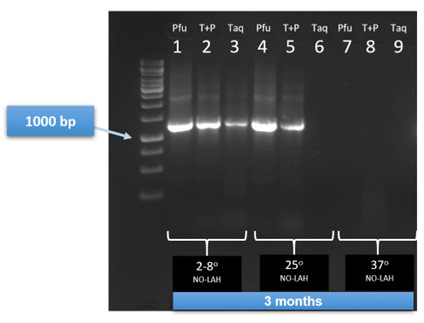 Figure 1. Agarose gel 1% electrophoresis result of amplifications using enzymes stored for 3 months without L-arginine hydrochloride (LAH)
Three-Month Shelf Life Test with L-Arginine Hydrochloride
The shelf life of the polymerase enzymes was assessed by storing them for 3 months with 1M of L-arginine hydrochloride as a preservative, followed by PCR amplification of a 1250 bp target fragment. results came as follows:
Storage at 4°C showed that The Pfu polymerase enzyme had a successful amplification, as seen in sample 10, while the Pfu + Taq mixture in sample 11 and Taq polymerase alone in sample 12 also showed positive results. Storage at Room Temperature 25°C,The Pfu polymerase enzyme produced a postive amplification band in sample 13. The Pfu + Taq enzyme mixture in sample 14 showed successful amplification. A positive amplification was observed in sample 15, which contained Taq polymerase alone. With Storage at 37°C, it appeared that The Pfu polymerase enzyme and mixtures of Taq+Pfu and Taq alone maintained activity and produced a clear amplification band as shown in samples 16, 17, 18 respectively. All these results are shown in Figure 2.
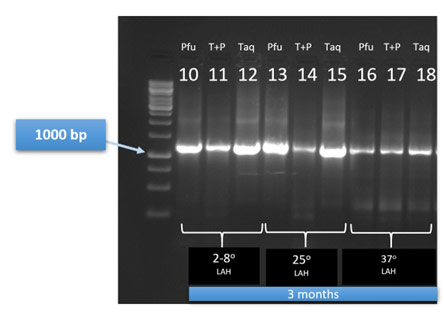 Figure 2. agarose gel 1% electrophoresis result of amplifications using enzymes stored for 3 months with L-arginine hydrochloride (LAH).
Three-Month Viability Test with L-Arginine Hydrochloride at -20°C
To evaluate enzyme viability under freezer storage conditions, PCR was performed on the 1250 bp target fragment using enzymes stored at -20°C. Enzymes Without L-Arginine Hydrochloride -20°C beginning with Pfu polymerase enzyme retained activity in sample 22, The Pfu + Taq mixture in sample 23 and Taq polymerase alone in sample 24 also produced successful amplifications. With L-Arginine Hydrochloride -20°C; The Pfu polymerase enzyme retained activity in sample 25, also The Pfu + Taq mixture in sample 26 and Taq polymerase alone in sample 27 also showed positive results. See Figure 3 for these electrophoresis results.
A commercial 1 ul Pfu enzyme (Vivantis) used as postitive control stored at -20°C was tested and produced a faint amplification band sample 21. A reaction using the locally produced Pfu polymerase without a template DNA as a negative control yielded no amplification symboled “-VE1” in sample 19 and another negative control that had the commercial Pfu (Vivantis) without a DNA template symboled “-VE2” in sample 20 gave also no result amplification, confirming the absence of contamination. Results are provided visually in Figure 3.
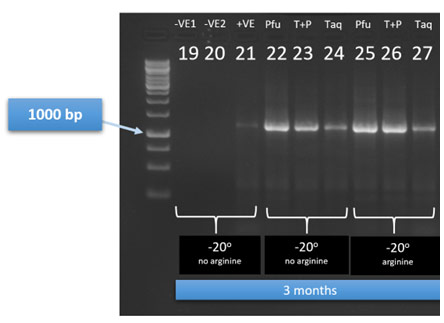 Figure 3. agarose gel 1% electrophoresis result of amplifications using positive and negative controls.
Discussion
Suggested mechanisms of L-Arginine Hydrochloride plays in Protein thermostability
L-arginine hydrochloride has been widely recognized for its role in enhancing protein stability through multiple molecular mechanisms, which contribute to reducing aggregation, improving solubility, and maintaining structural integrity in accordance with Hao et al. (2022)11. The principal mechanisms by which L-arginine hydrochloride stabilizes proteins are as follows:
- Prevention of Protein Aggregation: L-arginine hydrochloride effectively mitigates protein aggregation by interfering with protein-protein interactions, thereby ensuring that active sites remain exposed. This interference prevents the formation of misfolded or inactive protein structures, promoting the retention of the native functional conformation, in accordance to Haskins et al. (2016). 12
- Enhancement of Protein Solubility: The solubility of numerous proteins, particularly those with intrinsically poor solubility, is significantly improved in the presence of L-arginine hydrochloride. Even at low concentrations, L-arginine hydrochloride has been shown to increase protein solubility, which in turn enhances overall stability approving results of Tsumoto et al. (2004).13
- Molecular Interactions and Structural Stabilization: The guanidinium group present in L-arginine hydrochloride plays a critical role in protein stabilization by interacting with hydrophobic regions of proteins. This interaction effectively shields these hydrophobic regions, reducing the energetic cost associated with their exposure and thereby stabilizing the protein structure concoring with Steven et al. (2023).14
- Thermal Stabilization: Experimental studies have demonstrated that L-arginine hydrochloride can increase the thermal stability of proteins, as evidenced by its ability to elevate the assembly temperature of proteins such as insulin. However, this effect has yet to be investigated in thermostable enzymes such as Pfu polymerase, which may exhibit different stabilization requirements as mentioned by Platt et al. (2015).15
- Competitive Water Binding and Hydrolysis Resistance: L-arginine hydrochloride competes with water molecules for interactions with proteins, thereby increasing the energy barrier for hydrolytic degradation. This competitive binding mechanism enhances overall protein stability by reducing susceptibility to hydrolysis and denaturation as described by Strub et al. (2004).16
- Electrostatic Interactions and Charge Stabilization: The presence of positively charged amino groups in L-arginine hydrochloride facilitates electrostatic interactions with negatively charged regions of proteins. These interactions contribute to the formation of stabilizing electrostatic bonds, which reinforce structural integrity and minimize the risk of conformational changes induced by environmental fluctuations. Like mentioned by Baynes et al. (2005).17
Taken together, these mechanisms highlight the multifaceted role of L-arginine hydrochloride as a stabilizing agent, particularly in preserving enzyme functionality under stress conditions. Further investigations are warranted to explore its potential effects on thermostable DNA polymerases, such as Pfu, under varying storage conditions.
Effect of L-Arginine Hydrochloride on Enzyme Stability
The results clearly demonstrate that L-arginine hydrochloride enhances the thermal stability of Pfu polymerase, allowing it to remain active even under elevated temperatures (37°C) for three months. Without L-arginine hydrochloride, enzyme activity was completely lost at 37°C. But With L-arginine hydrochloride, the Pfu polymerase enzyme retained activity at both 25°C and 37°C, suggesting stabilization against thermal degradation. These findings align with the study by Hada et al. (2023)18, which reported that L-arginine prevents protein aggregation, thereby maintaining enzyme function over time.
Pfu polymerase exhibited the highest resistance to degradation, particularly in the presence of L-arginine hydrochloride. Pfu+Taq mixtures showed moderate stability, with partial loss of activity at elevated temperatures. Taq polymerase alone exhibited the least stability, failing to amplify DNA at room temperature (25°C) or 37°C without a preservative.
This suggests that while L-arginine hydrochloride is an effective stabilizer, its efficacy varies depending on the enzyme type and its intrinsic thermal resistance.
Conclusions
This study provides a proof-of-concept for the use of LAH as a stabilizing agent for polymerases. Findings in this study have significant implications for enzyme preservation in low-resource settings where cold storage facilities may be limited. The ability to store polymerase enzymes at room temperature or even elevated temperatures (37°C) using 1M L-arginine hydrochloride could Reduce cold chain dependency for enzyme storage, Enable on-site PCR diagnostics in regions with limited refrigeration, and Lower costs associated with enzyme importation and storage.
Supplementary Materials: all needed materials to duplicate this research are available in the article, in case of further information, contact the correspondant autor.
Author Contributions: all authors contributed equally in this research.
Funding: This research was funded from the high commission of scientific research in syria, contract NO. 2 in 2021.
Data Availability Statement: all needed data are available in the article, in case of further information, contact the correspondant autor.
Conflicts of Interest: The authors declare no conflict of interest.
Acknowledgments: We thank Dr. Jennifer Molloy from Openbioconomy lab in the university of cambridge for providing the Plasmid used in this study.
References [Vancouver]
- Pal S, Das M, Dasgupta D (2012) Structural studies of arginine-induced enhancement in the activity of T7 RNA polymerase. Biophys. Res. Commun. 421(1):27-32.
- Sepahi M, Jalal R, Mashreghi M (2017) Antibacterial activity of poly-l-arginine under different conditions. J. Microbiol. 9(2):103.
- Zhao Z, Wen SA, Song N, Wang L, Zhou Y, Deng X, Wu C, Zhang G, Chen J, Tian GB, Liang M (2024) Arginine‐enhanced antimicrobial activity of nanozymes against Gram‐negative bacteria. Healthc. Mater. 13(4):2301332.
- Bijle MN, Pichika MR, Mak KK, Parolia A, Babar MG, Yiu C, Daood U (2021) Concentration-dependent multi-potentiality of L-arginine: Antimicrobial effect, hydroxyapatite stability, and MMPs inhibition. Molecules 26(21):6605.
- Bijle MN, Ekambaram M, Lo EC, Yiu CK (2019) The combined antimicrobial effect of arginine and fluoride toothpaste. Rep. 9(1):8405.
- Arakawa T, Ejima D, Tsumoto K, Obeyama N, Tanaka Y, Kita Y, Timasheff SN (2007) Suppression of protein interactions by arginine: a proposed mechanism of the arginine effects. Chem. 127(1-2):1-8.
- Kim NA, Hada S, Thapa R, Jeong SH. Arginine as a protein stabilizer and destabilizer in liquid formulations. International Journal of Pharmaceutics. 2016 Nov 20;513(1-2):26-37.
- Agrillo B, Porritiello A, Gratino L, Balestrieri M, Proroga YT, Mancusi A, Cozzi L, Vicenza T, Dardano P, Miranda B, Escribá PV (2023) Antimicrobial activity, membrane interaction and structural features of short arginine-rich antimicrobial peptides. Microbiol. 14:1244325.
- Bhadra S, Nguyen V, Torres JA, Kar S, Fadanka S, Gandini C, Akligoh H, Paik I, Maranhao AC, Molloy J, Ellington AD (2021) Producing molecular biology reagents without purification. PLoS One 16(6):e0252507.
- Davies K (2020) From the bench to Benchling. GEN Edge 2(1):303-9.
- Hao M, Cui R, Zhu X, Han L, Zhou Z, Liu Z (2022) Improving the activity and synergistic catalysis of L-aspartate β-decarboxylase by arginine introduction on the surface. Sci. Technol. 12(17):5281-9.
- Haskins N, Mumo A, Brown PH, Tuchman M, Morizono H, Caldovic L (2016) Effect of arginine on oligomerization and stability of N-acetylglutamate synthase. Rep. 6(1):38711.
- Tsumoto K, Umetsu M, Kumagai I, Ejima D, Philo JS, Arakawa T (2004) Role of arginine in protein refolding, solubilization, and purification. Prog. 20(5):1301-8.
- Steven R (2023) Effects of arginine in therapeutic protein formulations: a decade review and perspectives. Ther. 6(4):265–76.
- Platts L, Falconer RJ (2015) Controlling protein stability: Mechanisms revealed using formulations of arginine, glycine and guanidinium HCl with three globular proteins. J. Pharm. 486(1-2):131-5.
- Strub C, Alies C, Lougarre A, et al. (2004) Mutation of exposed hydrophobic amino acids to arginine to increase protein stability. BMC Biochem. 5:9.
- Baynes BM, Wang DI, Trout BL (2005) Role of arginine in the stabilization of proteins against aggregation. Biochemistry 44(12):4919-25.
- Hada S, Burlakoti U, Kim KH, Han JS, Kim MJ, Kim NA, Jeong SH (2023) A comprehensive evaluation of arginine and its derivatives as protein formulation stabilizers. J. Pharm. 647:123545.
| Received: [6 enero 2026] | Accepted: 12 febrero 2026 | Published: 15 marzo 2026 |
Citation: Shenekji, J; AL-Daoud, A; Ghrewati, A. Using L-arginine hydrochloride as a preservative for polymerase enzymes in room temperaturas. Bionatura. 2026. Vol 11 No 1. https://doi.org/10.70373/RB/2026.11.01.5
Peer review information: Bionatura thanks the anonymous reviewers for their contribution to the peer review of this work using https://reviewerlocator.webofscience.com/
All articles published by Bionatura Journal are freely and permanently accessible online immediately after publication, without subscription charges or registration barriers.
Publisher’s Note: Bionatura stays neutral concerning jurisdictional claims in published maps and institutional affiliations.
Copyright: © 2026 by the authors. Submitted for possible open access publication under the terms and conditions of the Creative Commons Attribution (CC BY) license (https://creativecommons.org/licenses/by/4.0/)
Vol11 No2 2026

INDEXADA EN















INDEXADA EN